Cebu Kurassic Journal
A Walk Around the Neighborhood in Cebu

Just a Stroll Around the Block
Take a casual walk around my neighborhood, and the everyday sights of Cebu turn out to be fascinating to Japanese eyes.
A Whole Lechon

Lechon is a whole roast pig. It’s a Cebu specialty, and you see it everywhere. A colleague at work apparently roasts one at home at Christmas. Obviously it’s not a size that fits in an oven — in the yard, they shave the pig’s bristles, and… I’ll spare you the details, but they roast it over an open flame for about half a day. In Cebu, lechon is served at just about every celebration without fail. It’s sold at shopfronts around town for around 800 pesos per kilo; tell them how many grams you want and they’ll weigh and cut it right there. Some places have seating, where lechon comes as a set with rice, and you put on one of the plastic gloves they keep on hand and eat with your fingers. In Cebu, the knife-and-fork combination doesn’t exist. It’s either a fork and spoon, one in each hand, or your hands. There are about three lechon shops on the main road in my neighborhood. Even if they all look like the same roast pig, surely the seasoning and the roasting differ in their own subtle ways. At one of them, people spill out onto the street before 7 a.m., waiting for the fresh lechon to come off the spit. Yes — for Filipinos, lechon in the morning is perfectly normal.
The Pineapple Sellers
Pineapples are also a very familiar fruit in Cebu. It’s not unusual for a vendor to turn up out of nowhere with a huge load of pineapples and suddenly start doing business on the roadside. Small ones go for about 50 pesos each, and if you say “slice it,” they’ll cut it up so you can eat it right away. That’s a real blessing — cutting a pineapple at home produces a mountain of waste. The pile of pineapples gets lower and lower over two or three days, and once they’ve sold the lot, the vendor quietly disappears. And then, one day, they turn up again (haha).
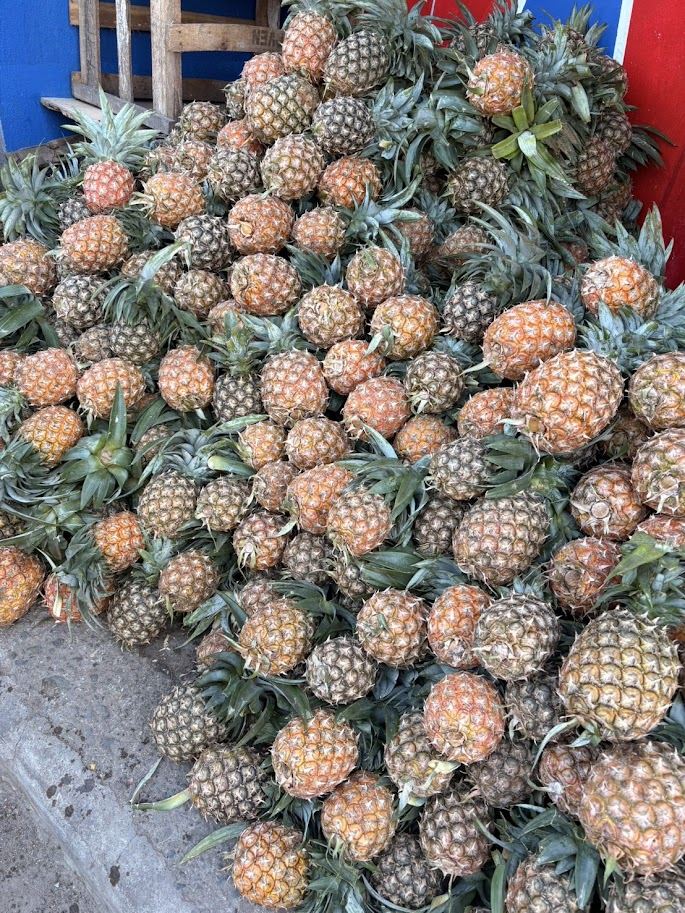
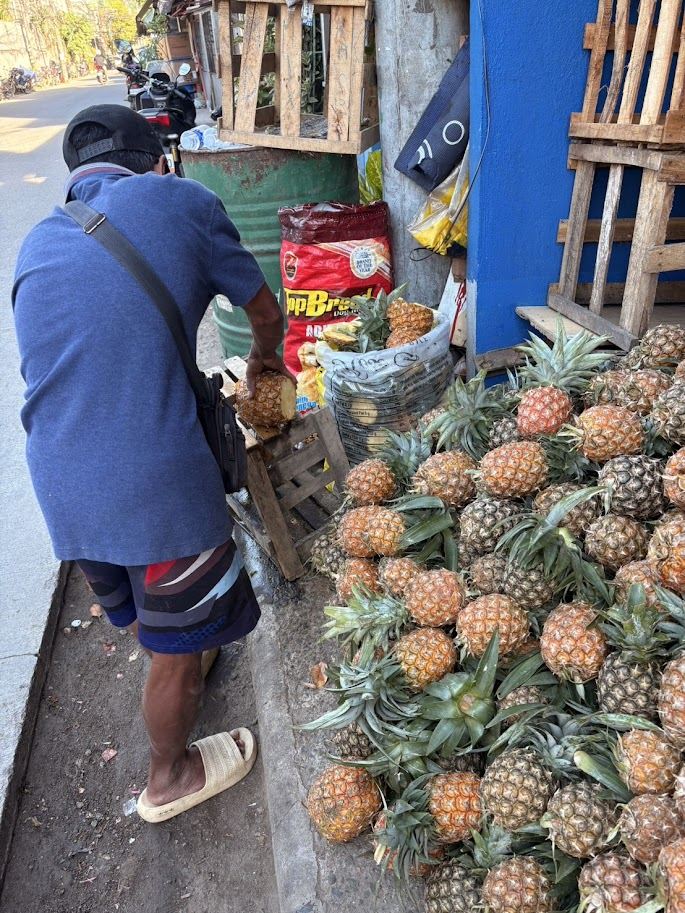
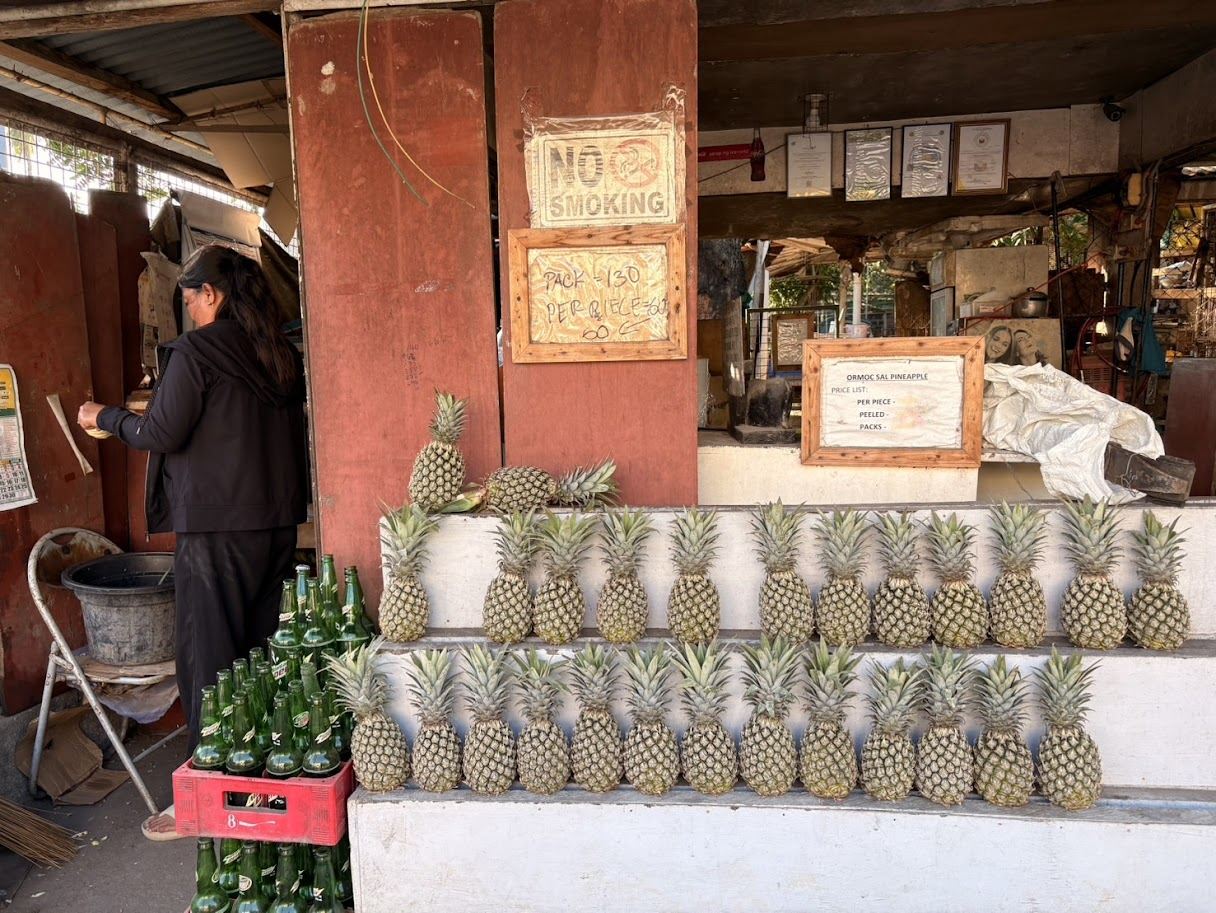
Of course, alongside the sellers who appear out of nowhere and leave without a word, there are pineapple sellers with proper shops. Still, compared to banana sellers, dedicated pineapple shops are rare. And “pineapple” covers a lot of ground — there are all sorts: juicy and intensely sweet, or crisp and refreshing. Comparing them deliberately turns out to be quite fun.
Just Like Japan’s ○○○
Now then — after a light wander around the neighborhood on the evening shopping run, right as I’m heading home, a savory smell starts drifting in from every direction. In Cebu, charcoal grills appear all over the streets in the evening. Skewered fish, grilled tuna collar, slabs of pork belly, and yakitori. There’s no gas or electricity out on the street, so everything is charcoal-grilled. The sauce tastes like Japanese yakitori sauce, made a little sweeter. Each shop has its own character in both flavor and grilling technique, so it’s worth trying a few. My favorite yakitori place has a sauce very close to the Japanese version and takes its time over the charcoal, which makes it delicious. Pork slices, chicken intestine, and chicken skin are 10 pesos a stick! Chicken meat or liver, just 20 pesos! One thing that differs from Japanese yakitori, though: the chicken is generally on the bone (haha). There are also distinctly Filipino skewers, like chicken heads and “Betamax” — congealed pig’s blood. If you like liver, the pig’s blood might just work for you.


Beer and yakitori tonight, then. I stop at my usual place, have them grill my usual skewers, and head home.