
Cebu Kurassic Journal
Saturday Farmers Market at Marco Polo Plaza, Cebu
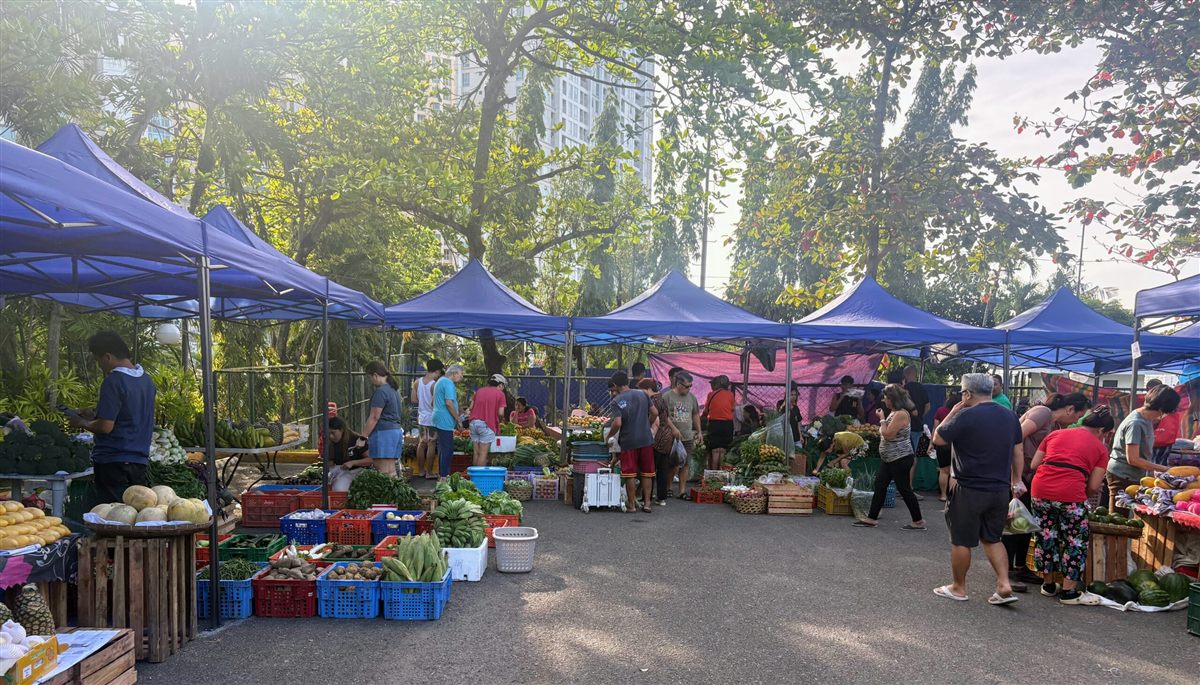
Saturday mornings have a different energy lately. Instead of just a walk, I bring my wallet and a reusable bag — because Saturday morning means the farmers market.
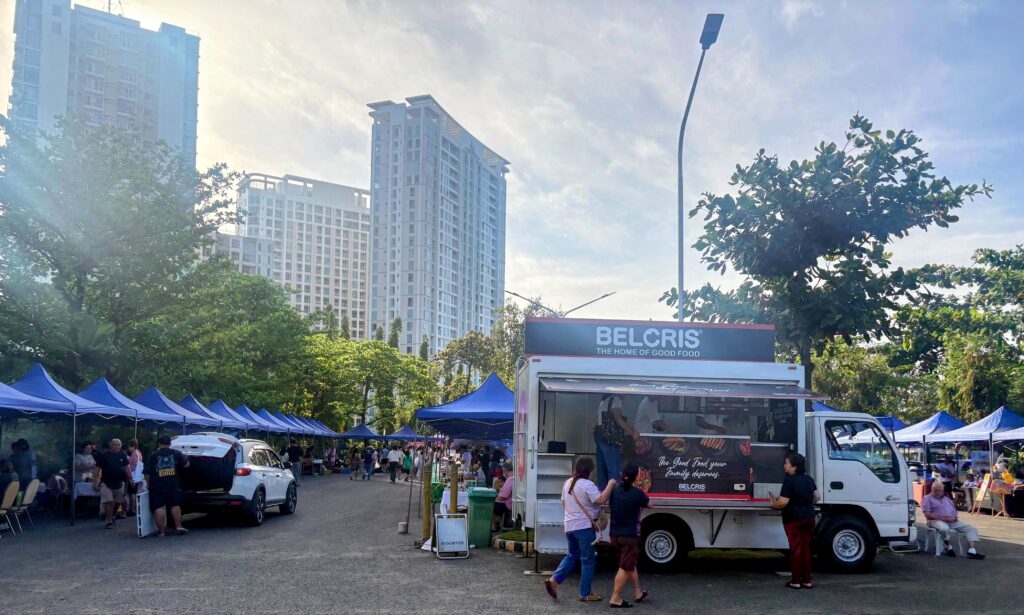
Every Saturday from 7am, the Marco Polo Plaza Hotel in the Lahug area of Cebu City hosts an outdoor farmers market in its parking area. The hotel sits up on a hill — one of the best viewpoints in the city — and the walk up is half the point.
From the intersection at JY Mall (the starting point of the hill road), it’s about 30 minutes on foot to the hotel. The road also serves as a training route for long-distance runners and cyclists who are already out in force by early morning. I walk up with the philosophy: move for health, eat for health. And then carry a very heavy bag back down.
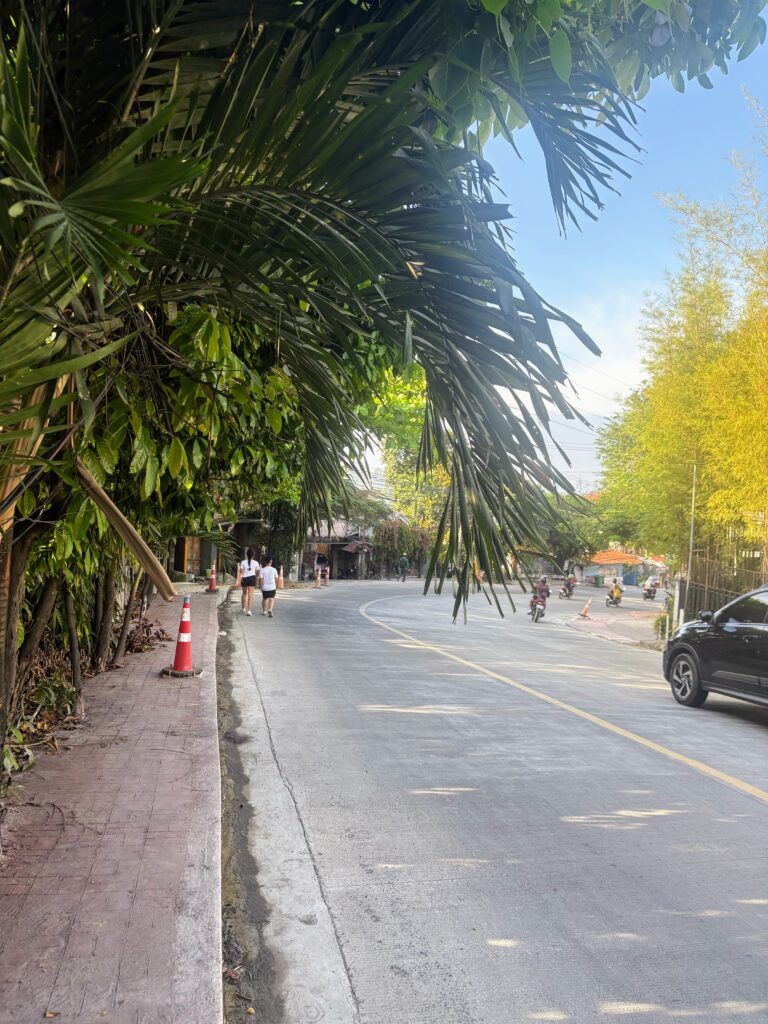
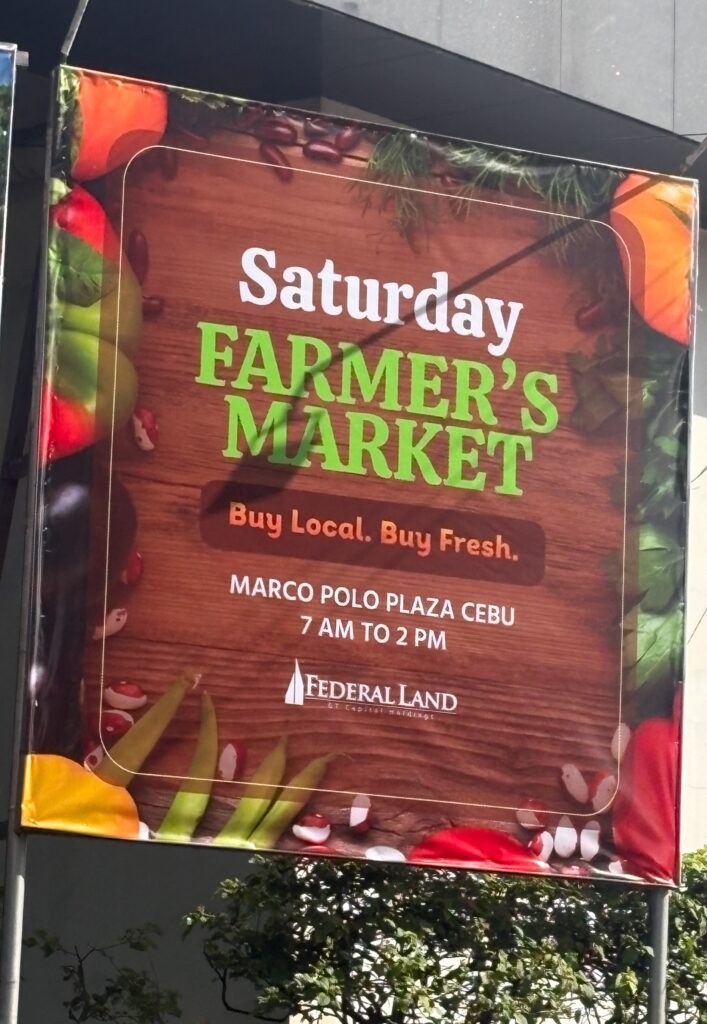
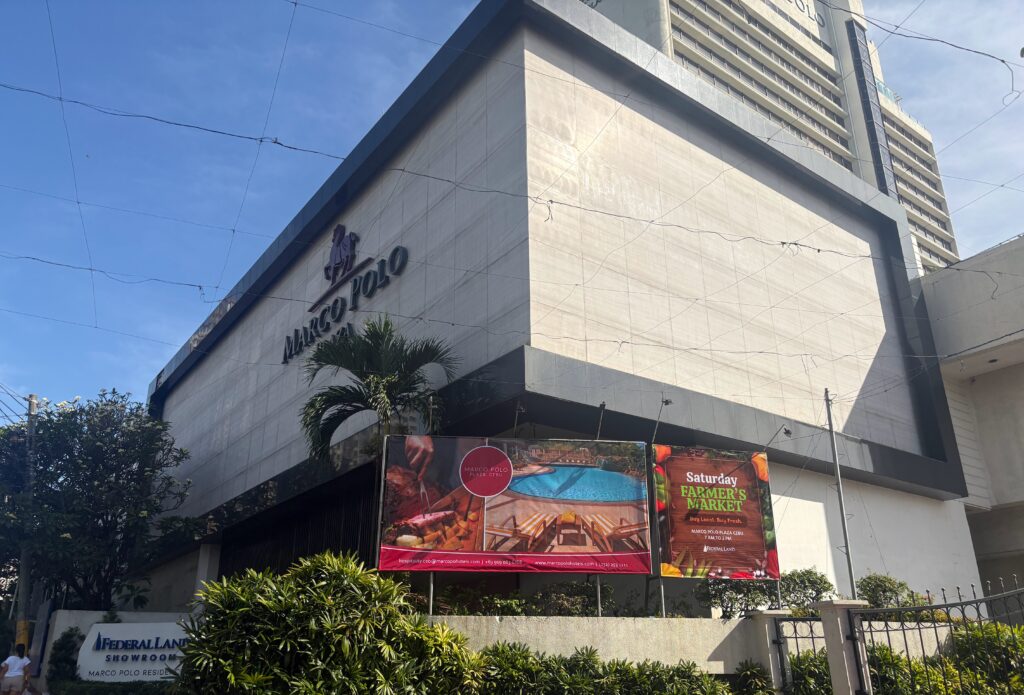
Through the hotel gate, the security guard greets me with his usual warmth — five-star hospitality carries through even to the market entrance. Straight to the parking lot, and the familiar blue tents come into view.
Today’s mission: broccoli.
Western vegetables — broccoli, cauliflower, zucchini, bell peppers — are expensive in Cebu year-round. A single head of broccoli can easily cost the equivalent of 500 yen. But in season, these “luxury vegetables” appear at the farmers market at prices that actually make sense.
Today: one large head of broccoli for 90 pesos. Two small zucchini for 60 pesos. One kilo of onions for 140 pesos. Plus avocado, daikon radish, carrots, green beans, tomatoes. The regular vendor who always rounds down on the odd amounts — thank you, as always. Supermarket vegetables here often look like they’ve given up on life. Here, everything is vivid and fresh.
The bag gets noticeably heavier with each stall.
And then I have to carry it back down the hill. I choose to frame this as strength training.
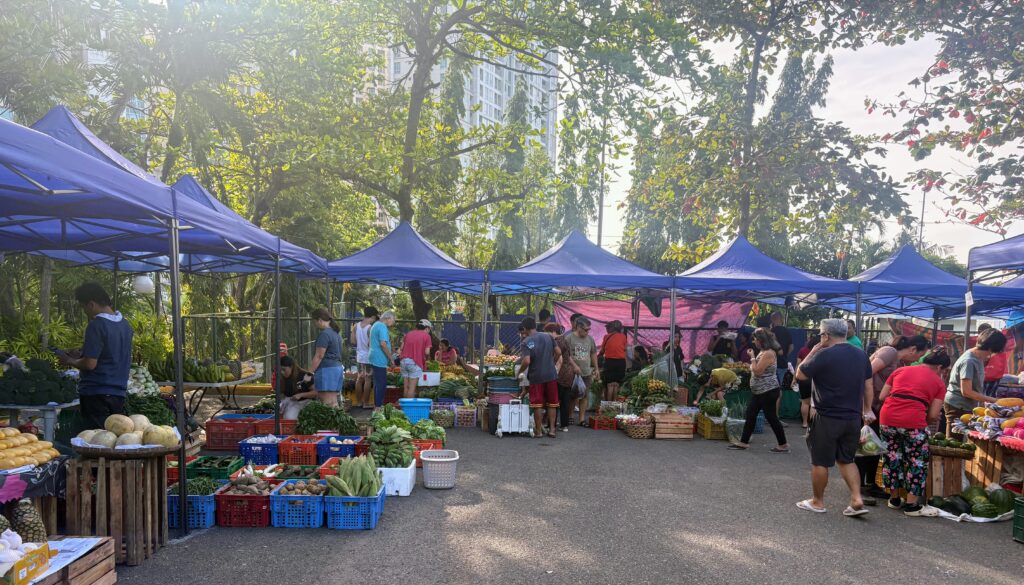
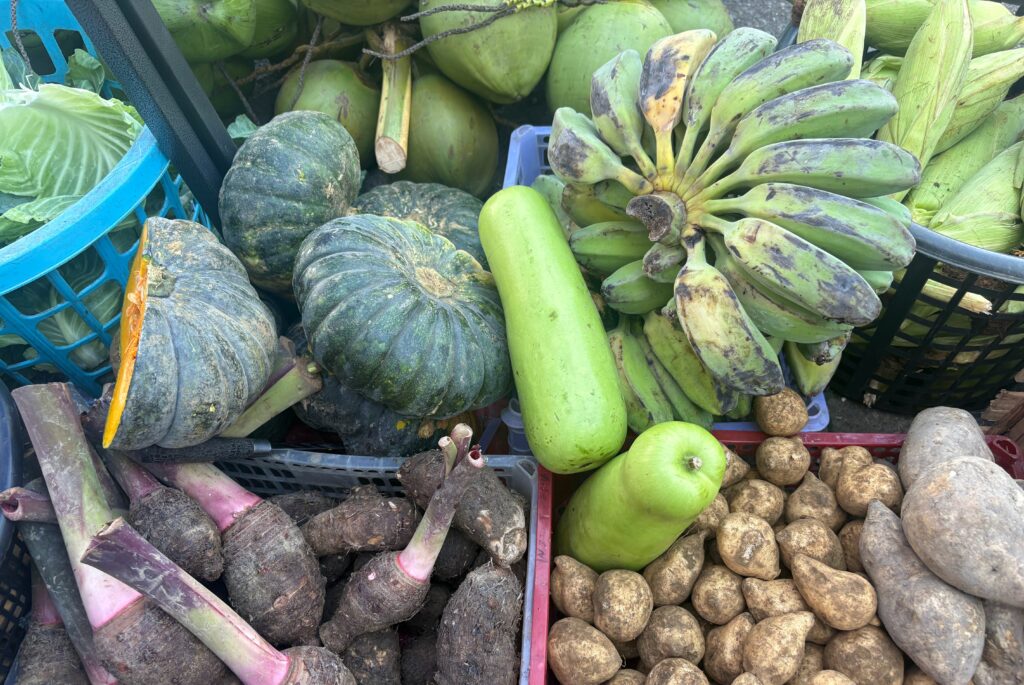
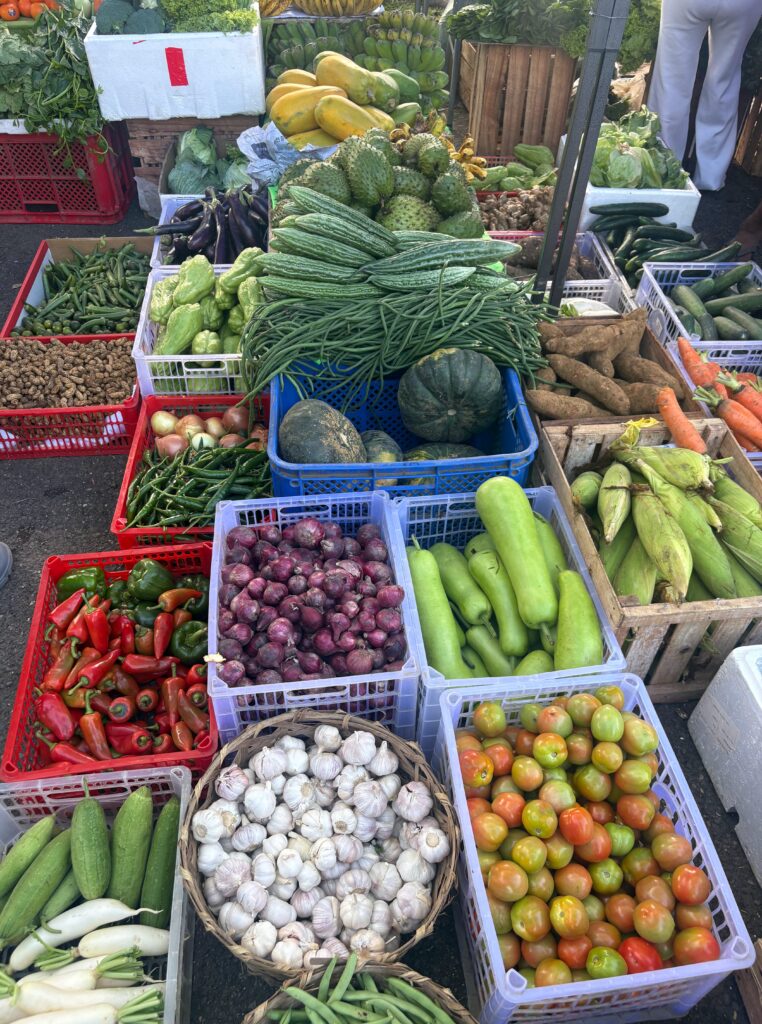
After the vegetable round, I browse a little: bread, pastries, eggs, handmade goods. Then I stop at the Marco Polo’s own stall for a coffee — 50 pesos for a five-star hotel coffee, purchased at a market stall. (Update: as of September 2026, it has gone up to 100 pesos. Sigh.) All the seats were taken, so I found a shaded spot in the parking lot to sit and drink it.
The haul for the day:
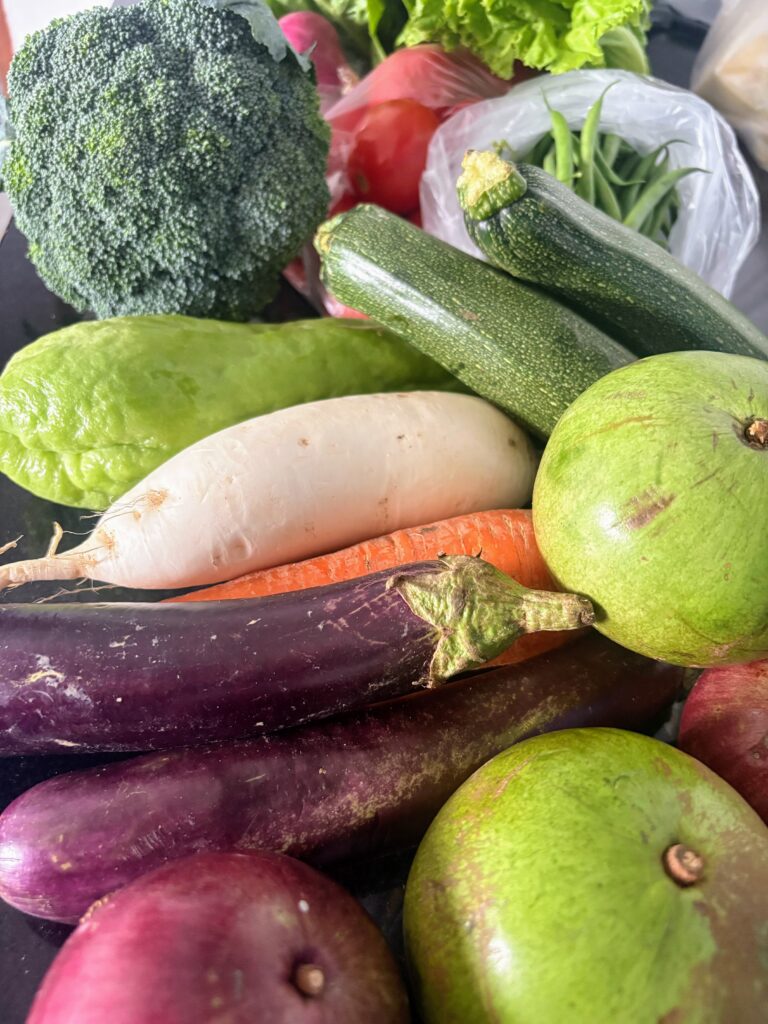
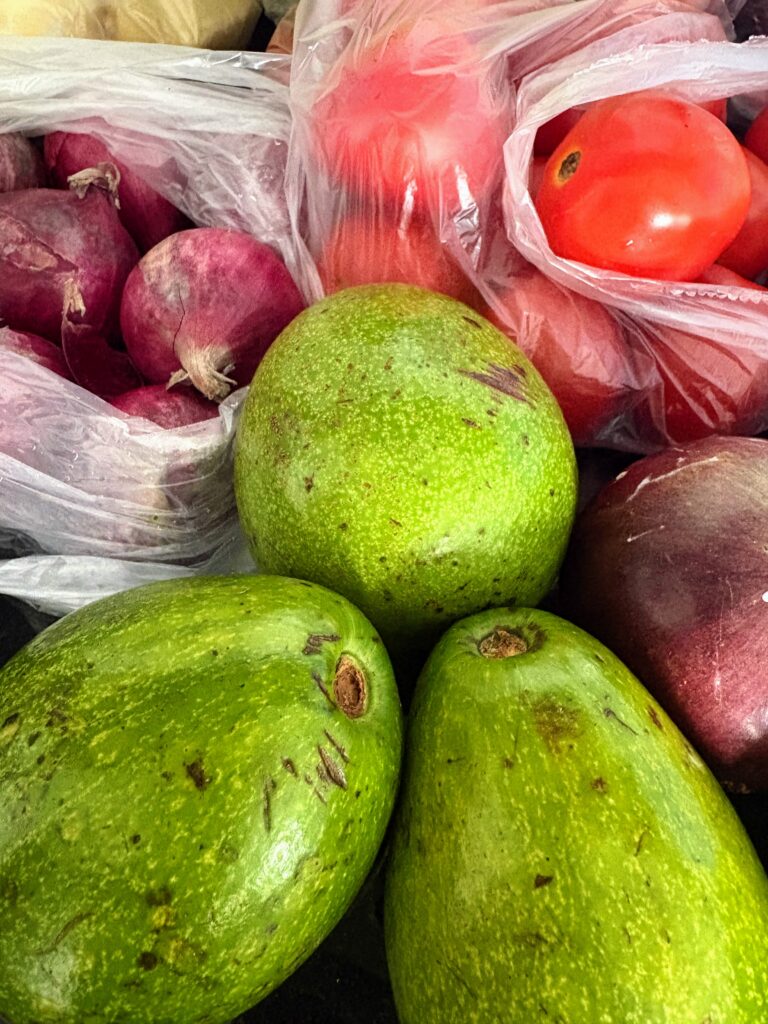
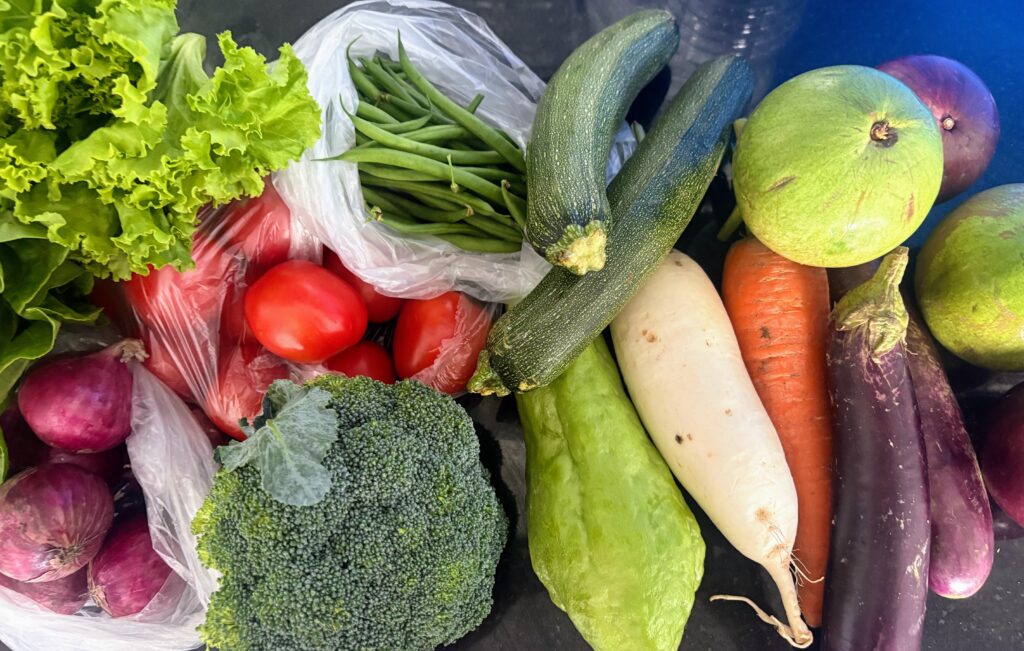
Filipino food is, let’s say, color-limited. Eating out often means a plate of brown (meat) and white (rice). Cooking for myself and deliberately adding green and yellow vegetables is genuinely one of the keys to staying healthy here. But it’s not a chore — discovering vegetables I’ve never seen in Japan, noticing that even in a country that’s basically perpetual summer there are seasonal ingredients, and planning my week around what the market has — that’s turned out to be one of the more unexpectedly enjoyable parts of life in Cebu.
The end.