Cebu Kurassic Journal
Bohol, Part 2
The Road to Anda

The Road to Anda
Anda is the region of Bohol farthest from Cebu — the island’s innermost retreat, so to speak. From the port of Tagbilaran, you ride a motorbike along the coast, on and on.
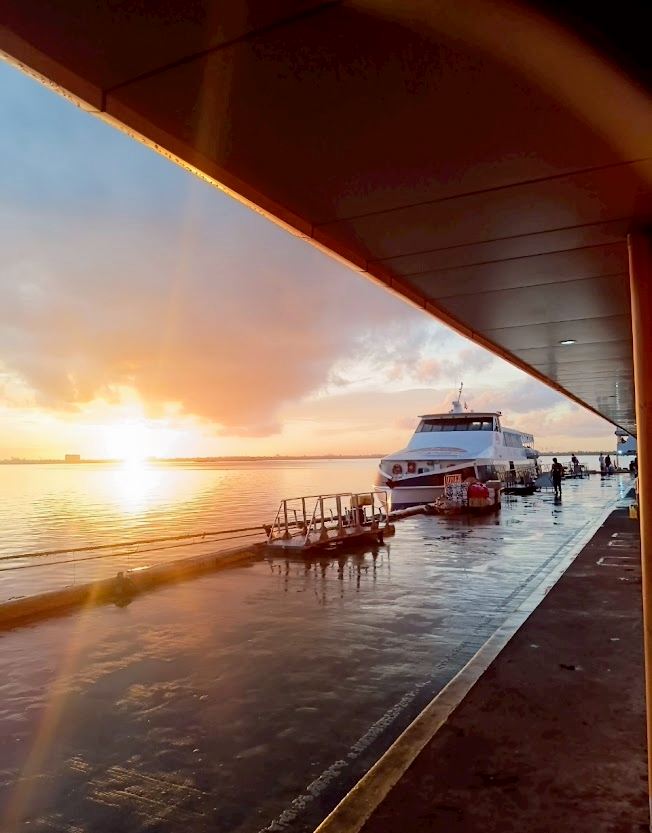
Early in the morning, I set off from Cebu’s Pier 1 (Port 1), and about two hours later arrived in Tagbilaran, Bohol. First thing, I rented a motorbike. A rental is 350 pesos a day, but they gave me a deal — 1,000 pesos for three days. In the Philippines, rental bikes basically come with an empty tank, so the first stop is always the gas station. Tank full, off we go!
The Philippines has churches everywhere, and from early morning people head to Mass. Many date back to the Spanish colonial era, carrying an air of history in their very presence.
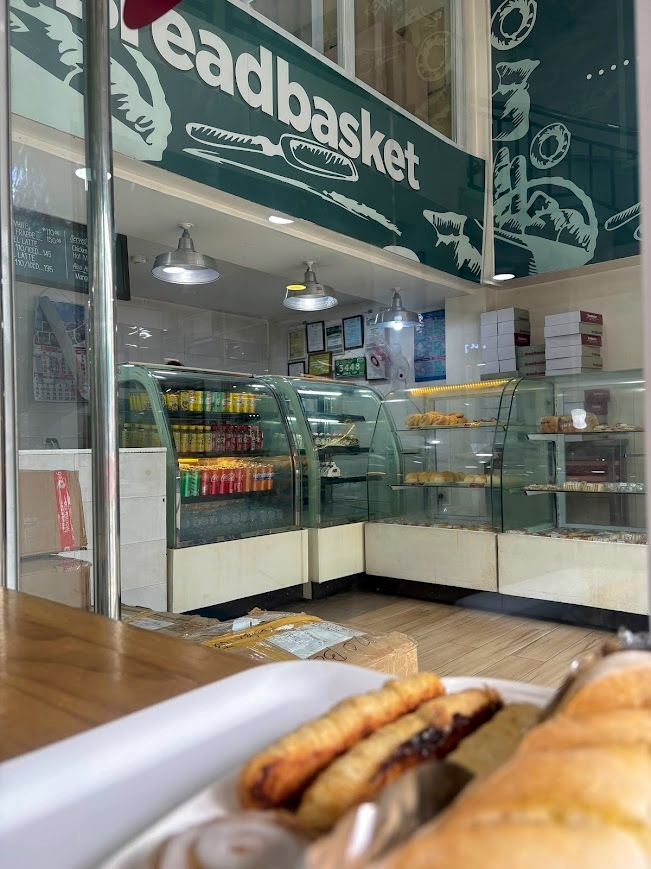
Now, time to fuel myself up too. In Tagbilaran there’s a cheese pie I absolutely love. The bakery that makes it doesn’t exist in Cebu — so far I’ve only ever seen it here in Tagbilaran — so I make a point of stopping by whenever I’m in Bohol. As always, I order the cheese pie and a cappuccino. The crust around the edges is wonderfully flaky and truly delicious. It’s the kind of place where you linger a little too long — but Anda is far. I have to press on.

A Stop at San Nicolas Church
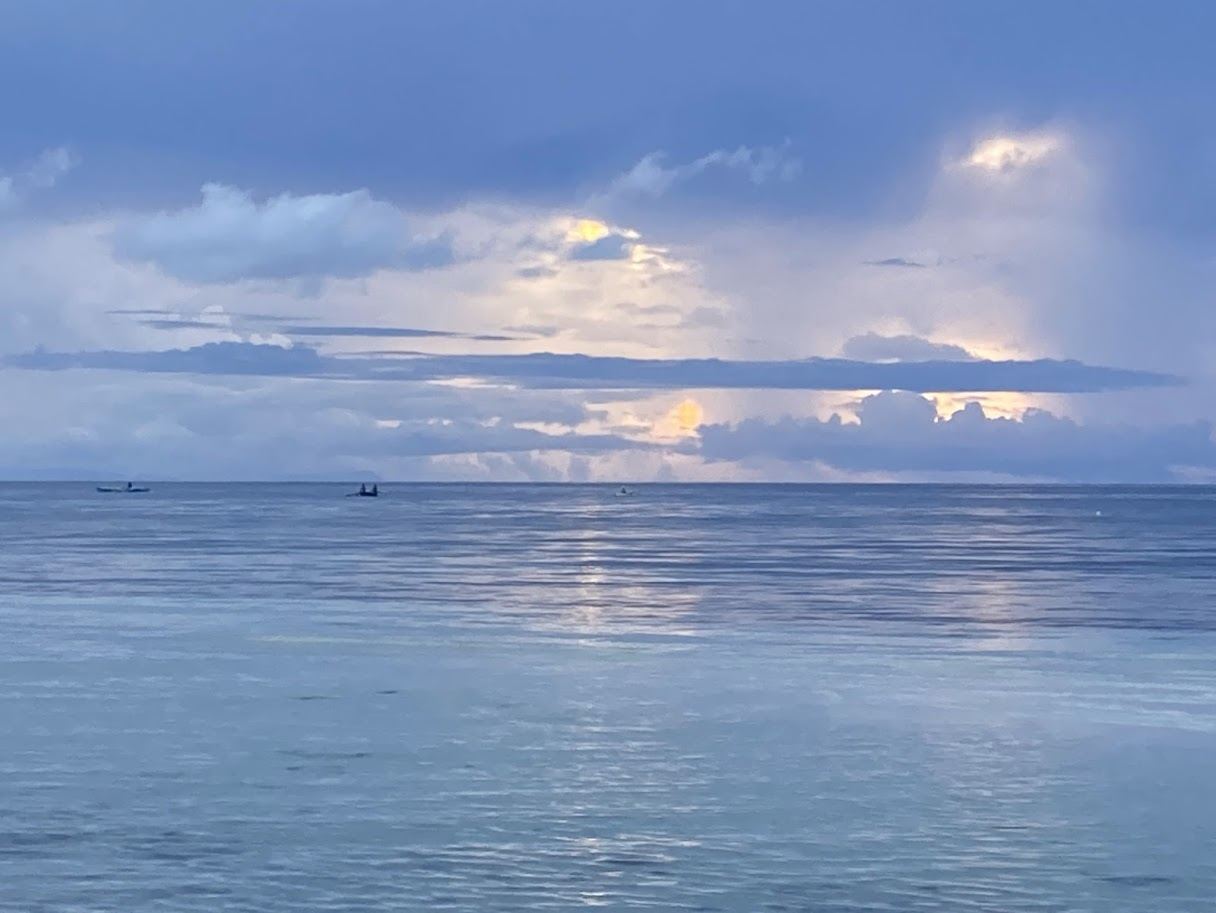
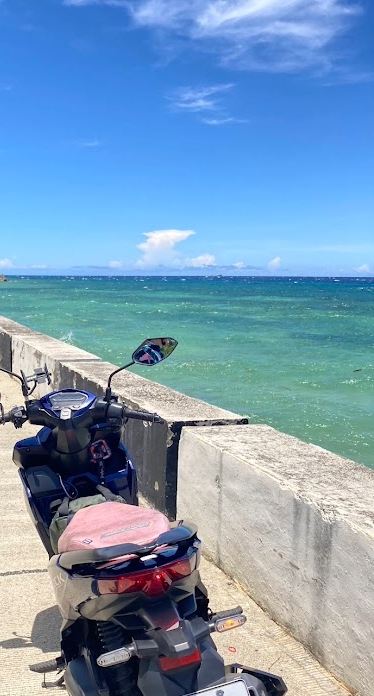
The road to Anda feels wonderful. The deep-blue sea is always there on your right, so beautiful that I keep stopping the bike to take photos. Bohol really is a magnificent island — good sea, good mountains. Bohol never disappoints. That’s why I keep coming back.
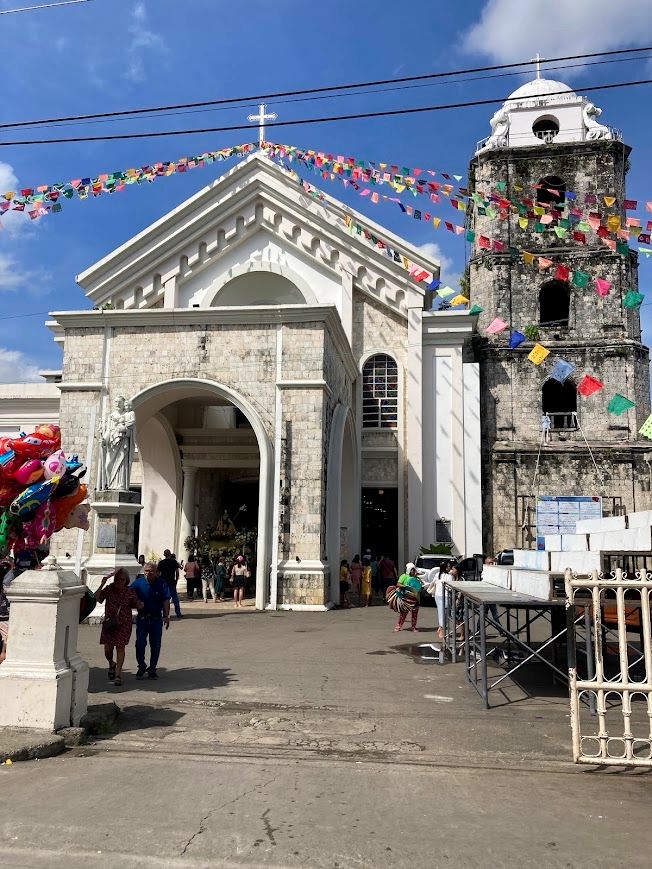
On the way to Anda, I spotted a large old church. As I mentioned, churches like this aren’t rare in the Philippines — but from the crowds of tourist-looking groups gathering there, I guessed it must be a famous one, and decided to stop.

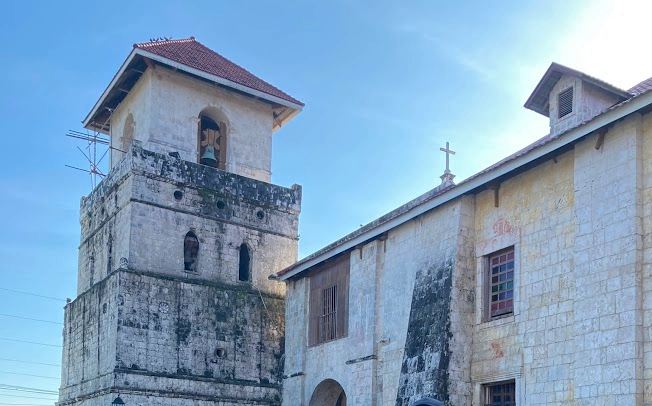
So it’s called “San Nicolas Church.” As usual, I asked Professor Google for the details (haha). Apparently it’s “a historic Catholic church built in the late 19th century, designated a National Cultural Treasure of the Philippines, famous for its beautiful neo-Baroque architecture — with defensive walls built against raids by southern pirates and a distinctive pair of twin bell towers.” It seemed you could go inside, too.

Step inside, and the air tightens a little. It’s because the locals are offering pure, heartfelt prayers. For a moment I hesitated — is this a place a curious foreigner should be sightseeing on the side of a trip? I don’t believe in the same things the locals do, and I’ve never felt what they believe in as something close to me. And yet — my view may be a little off here — I have a feeling that something takes on a soul when it becomes the image of what people believe in. That’s why I sense this as a “sacred place,” and why my heart shrinks back without my even meaning it to. Yes — it’s beautiful. Sitting down in this space, my heart slowly melts into the quiet and the cry of a bird that has wandered in from outside. My body, flushed from the sun outside, is cooled in an instant.
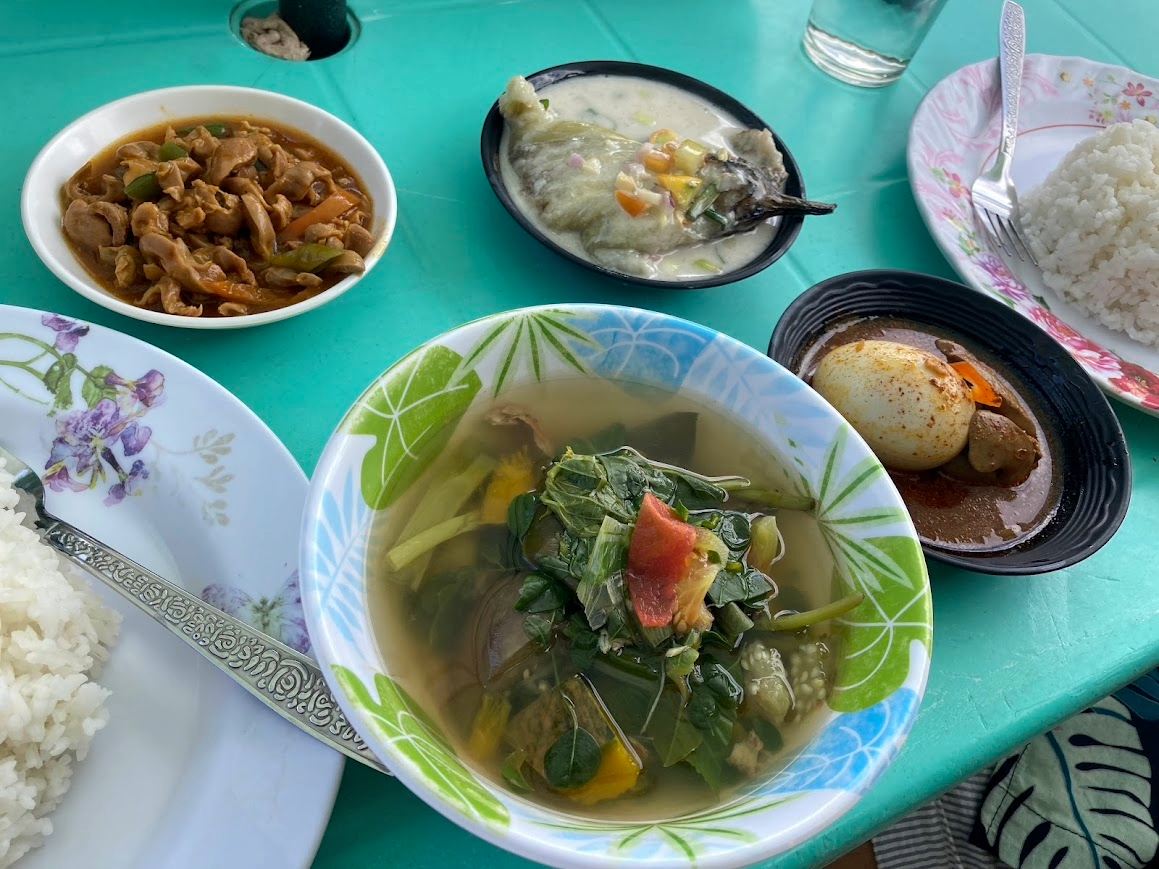
Since I had to keep moving, I said goodbye to the comfort of the church and raced on down the road to Anda. Mountains lined with coconut trees on the left, blue sea on the right — the perfect road for a ride. Along the way I stopped at a carinderia for lunch. They had the eggplant salad I love. Stomach satisfied, I sped off again.
Arriving in Anda
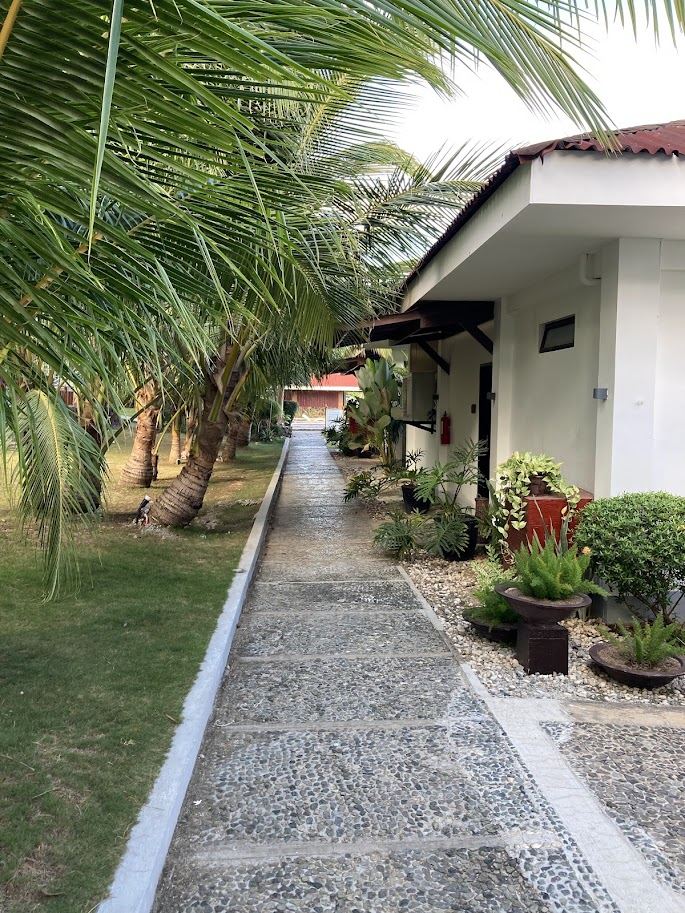
After four hours of riding — with plenty of detours — from Tagbilaran, I finally reached Anda. Straight away, I made for the hotel. My criteria for choosing a hotel are simple: it must have a balcony, and the sea must be right in front. I arrived and was shown to my room. The hotel is dotted with cottages, all beautifully kept. One of its selling points is the infinity pool — built so you lose track of the line between the blue sea and the pool, it makes you want to soak in it forever, like a hot spring. One of the curious traits of Filipinos: even with a beautiful sea right in front of them, for some reason they love the pool (haha). It’s a little hard to understand — but a pool like this, and even I want to jump in.
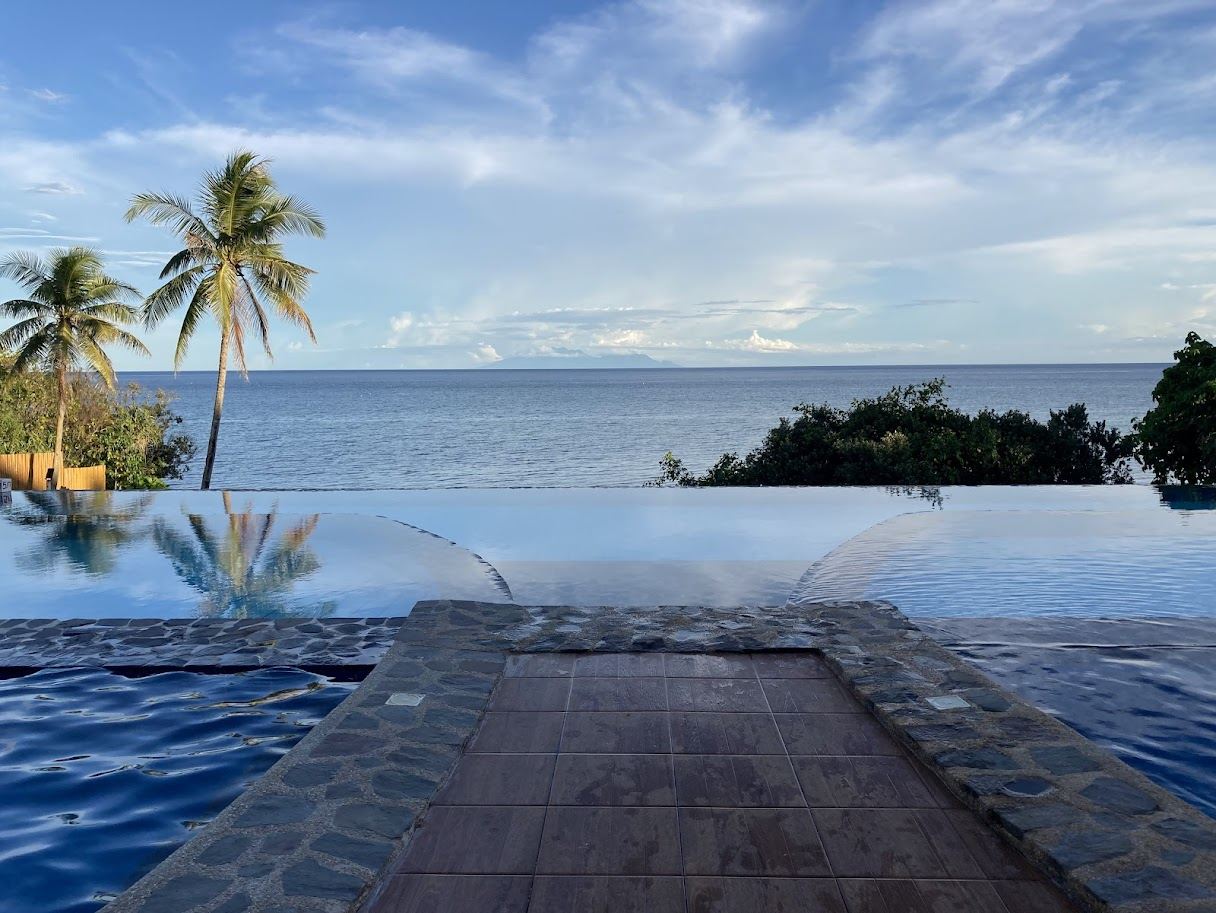
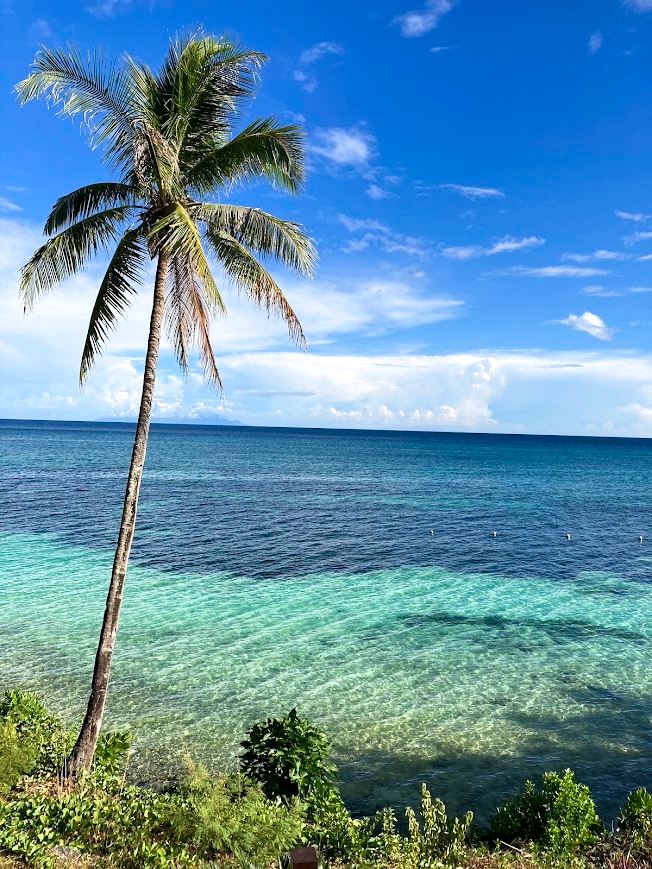
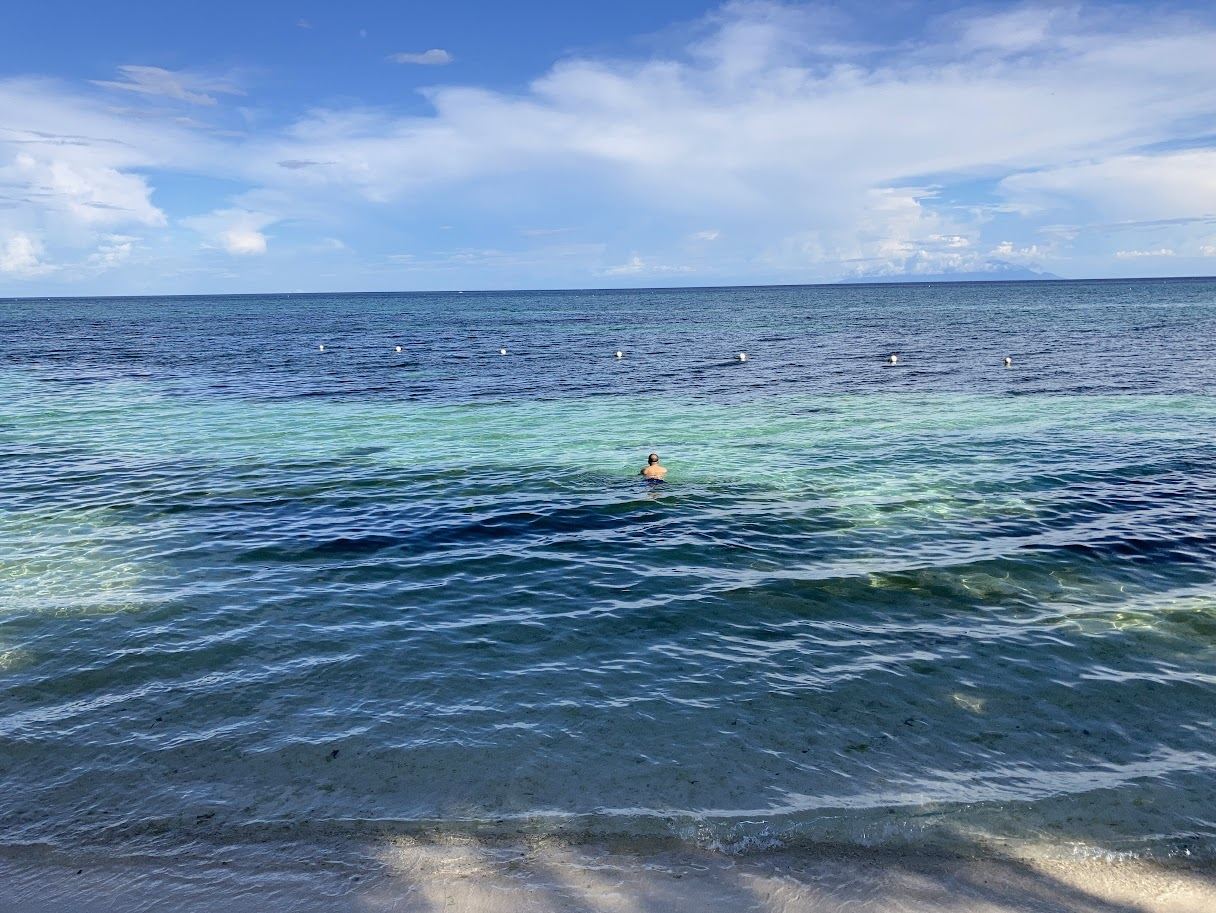
The pool is nice, but this hotel faces the sea, with a private beach too — surely the sea should come first, I thought, and made my way over. Before long, a gradient came into view: the pale blue of the shallows and the fathomless deep navy beyond. Ah — as beautiful a sea as ever.
The sea back in my hometown in Japan is, sadly, a murky color you couldn’t call blue. Worse still, the rivers in Cebu City nearby are choked with trash, raw sewage flowing into them so you can’t see the bottom. Such beautiful nature, and yet the sense of ethics to protect it hasn’t taken root in people yet. Or — perhaps nature isn’t something protected by ethics after all. Just as it takes years enough to mature as a person before you grasp the depth of a parent’s love, maybe nations and peoples, too, need time to mature. In any case, every time I meet the beautiful seas of the Philippines, I wonder — where does all that freely, carelessly polluted water get purified before it arrives here?
The Southern Cross
Night fell, and I went down to the deserted beach. And there — a night sky open a full 360 degrees. Near the horizon, a beautiful cross was shining. The Southern Cross! I tried to photograph it with my phone, though the image is surely too blurry to convey this wonder. Even so, I want to share even a little of it. The two bright stars on the left of the photo are the markers for finding the Southern Cross. And on the right, faint though it is — if you can just make it out — that is the Southern Cross. In Cebu too, the window to see it is limited. Around 8 p.m. or in the early morning, it creeps low across the night sky, then vanishes into the darkness or the sunrise.
I’ve tried raising the topic of the Southern Cross with Filipinos a few times, but I’ve never managed to share the culture of admiring the stars (haha). Even when I speak passionately about there being stars you can’t see in Japan, sadly the same enthusiasm never comes back… And it’s so beautiful, too…

To White Beach at Dawn
My daily morning walk is something I never skip, even while traveling. If anything, a morning walk taking in the mountains, beaches, and unfamiliar towns of a destination lets you savor a place’s true character — even a tourist spot is quiet, with few people about.
I woke before sunrise and rode the rental bike about ten minutes to reach White Beach. Here, a beach as beautiful as those of Boracay — one of the Philippines’ premier resorts — stretches on more than long enough for a walk. Strolling leisurely, one way must take about an hour. Pure white sand, a hazy sky washed in pink and pale blue, and the light-blue sea resting quietly as if melting into it. Since coming to Cebu, I’ve been moved again and again by the beauty of the dawn. Skies burning red, skies where the sun’s rays stretch out like beams, clouds glowing fluorescent orange. But a dawn this soft — it’s my first. A pale, gentle sky. Sea and sky blending into one — what a tender morning this is.