Cebu Street Snacks — Part 4
Fried & Skewered
More Street Snacks, Still Going
More favorites I could eat almost daily. This time it’s the fried, skewered series.
Kamote-que
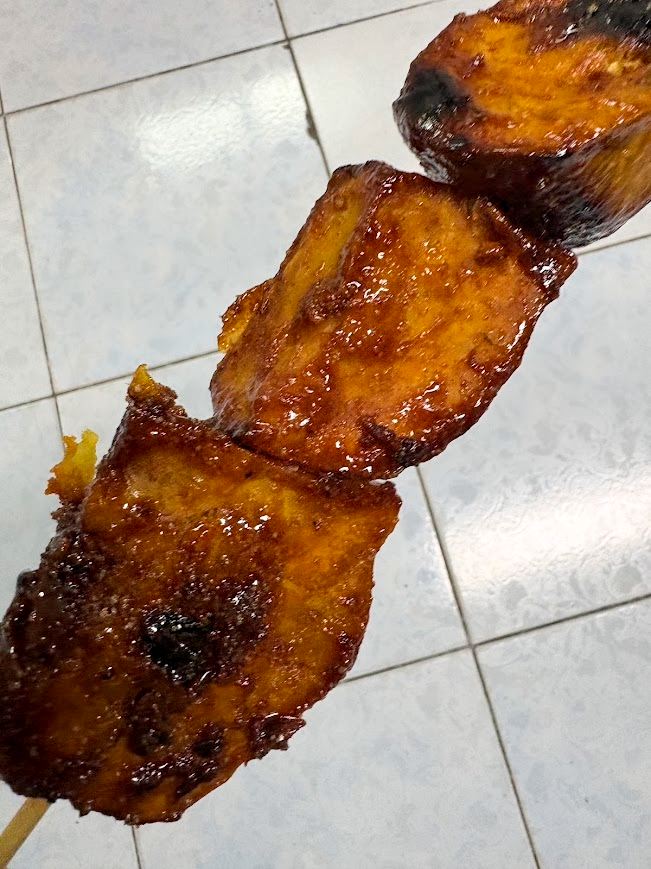
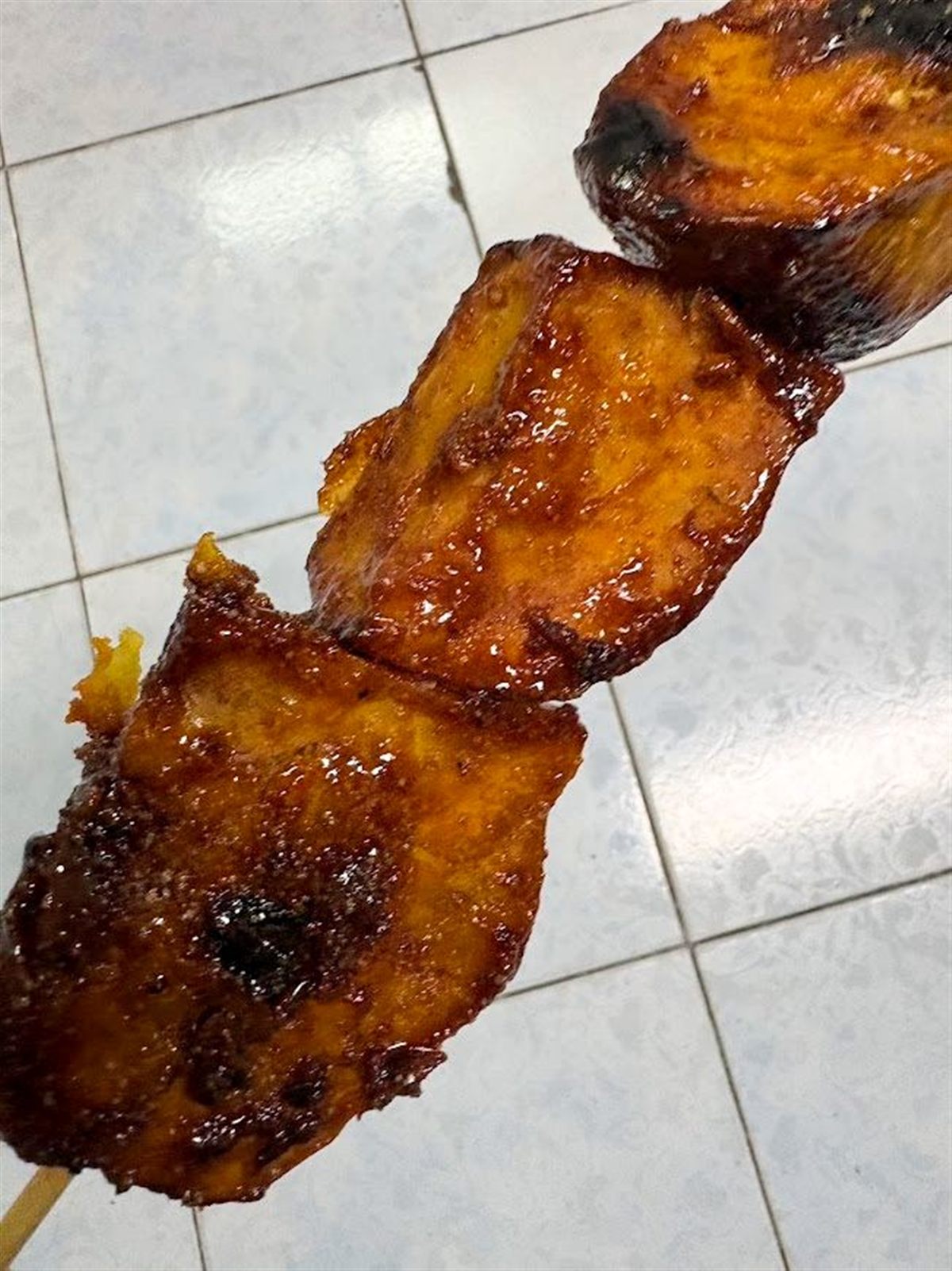
Kamote means sweet potato. The Philippines has all kinds — white skin with purple flesh, purple skin with orange flesh, light brown skin with yellow flesh — and comparing them is genuinely fun. About 80 pesos a kilo, which is very reasonable. Filipinos tend to agree the orange-fleshed variety is the sweetest, and I agree.
As for “-que”: I’ve never confirmed this, but I understand both banana-que and kamote-que refer to the same method — skewered, deep-fried in oil, coated in melted brown sugar. So kamote-que is sweet potato, deep-fried and coated in caramelized brown sugar — essentially the Filipino cousin of Japanese daigaku-imo (candied sweet potato). One skewer holds 3–4 bite-sized pieces, for about 25 pesos. I tell myself it’s healthy because it’s sweet potato. My favorite kamote-que stall does it just right — crisp caramelized sugar on the outside, soft and starchy inside. I’ve also timed my visits to catch it fresh off the fryer.
Turon
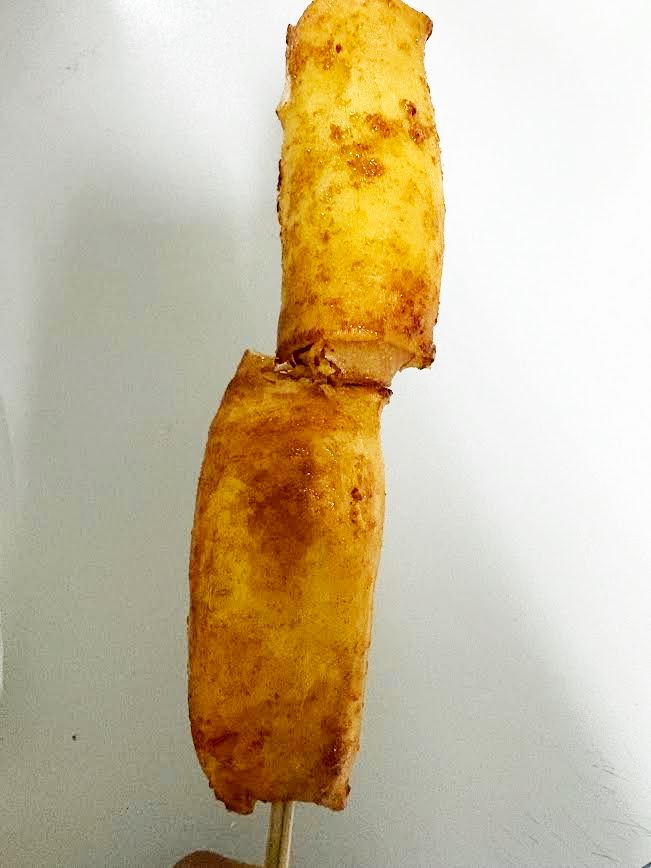
Next up, another favorite: turon. It’s saba banana wrapped in spring roll wrapper and deep-fried. Saba is a stout, short banana — steamed while still green, it has a faintly sweet, starchy texture almost like taro; once it ripens yellow, the sweetness deepens with a bright acidity that works well too. It’s good on its own, but also steamed with the skin on, grilled, or boiled — a genuinely versatile banana.
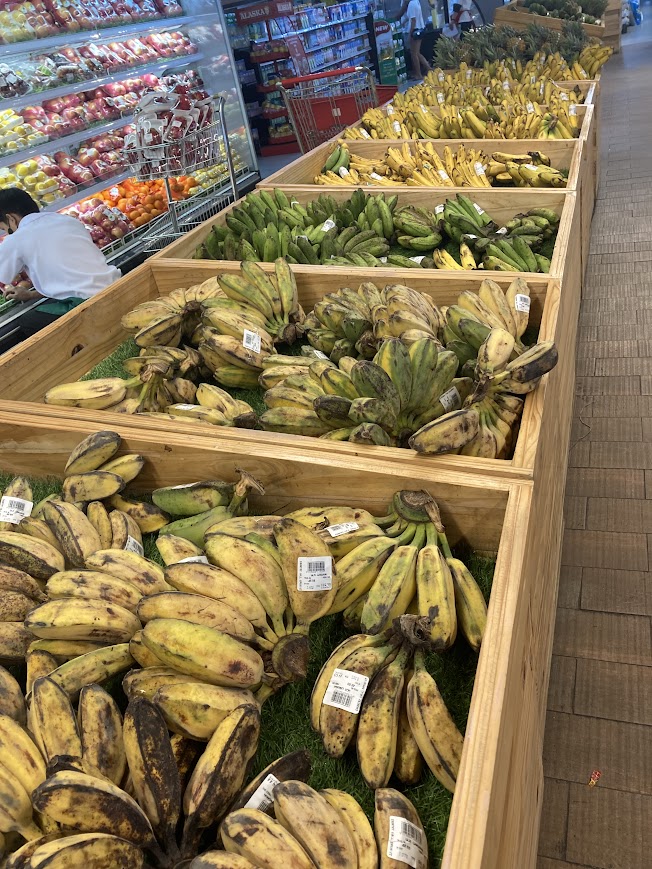
Saba shows up everywhere — supermarkets, street corners, you name it. For turon, it gets wrapped in a spring roll wrapper and either fried until crisp with caramelized brown sugar, or fried plain and dusted with sugar afterward. I personally prefer turon fresh off the fryer with no added sugar. At my regular stall, if I time it right and catch a fresh batch, the aunties know to skip the sugar for me — a little unofficial custom order. About 25 pesos, two pieces per skewer, so it’s a fair amount of food. I usually eat it as a mid-morning snack around 10am, and after that I barely feel hungry again until well into the afternoon. Turon is easier to find than kamote-que — sold pretty much everywhere — so it’s a good one to try first.
Pinaipai
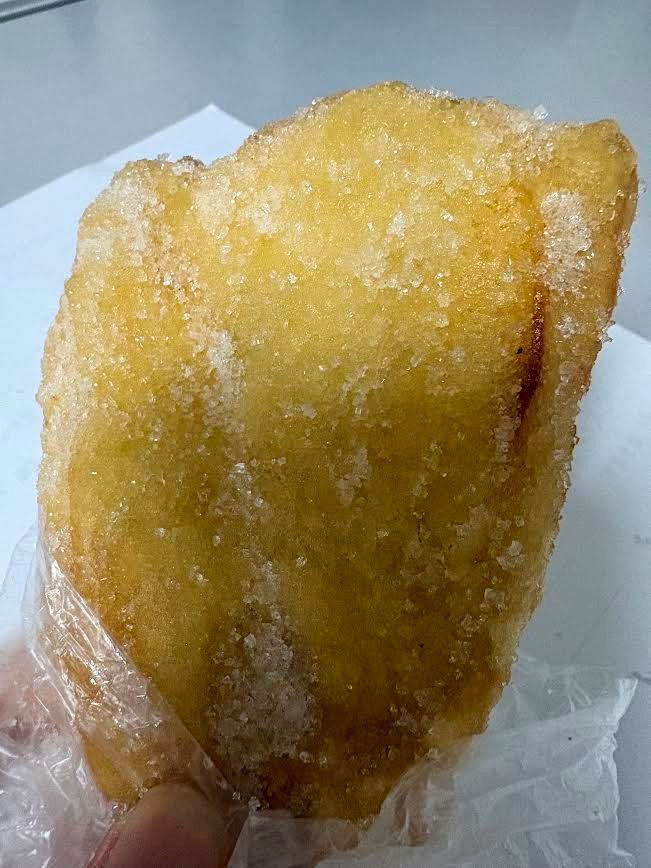
Pinaipai — “pinai” apparently means “fan” in Bisaya, and the shape does resemble one. Like turon, it’s made from saba banana. The banana is sliced into a fan shape, coated in a pancake-mix-style batter, and deep-fried until crisp, then dusted with sugar. In the photo the vendor has already removed it from the skewer for easier eating, but it’s normally sold with two pieces on a stick, same as turon. The batter itself carries a bit of sweetness, which sets it apart from turon — also excellent. Also around 25 pesos, and reasonably easy to find.
Continued in Cebu Street Snacks Part 5…