
Bohol, Part 1
Chocolate Hills & the Tarsier
To Bohol
About two hours by boat from Cebu, you reach the large, nature-rich island of Bohol. Bohol has it all — mountains and sea alike — a place overflowing with charm. It’s so vast that it’s impossible to pack all of Bohol’s appeal into a single trip. I’ve now visited three times, each time choosing a different area to explore. This time, I want to introduce the Chocolate Hills and the tarsier.
By Ferry to Tagbilaran
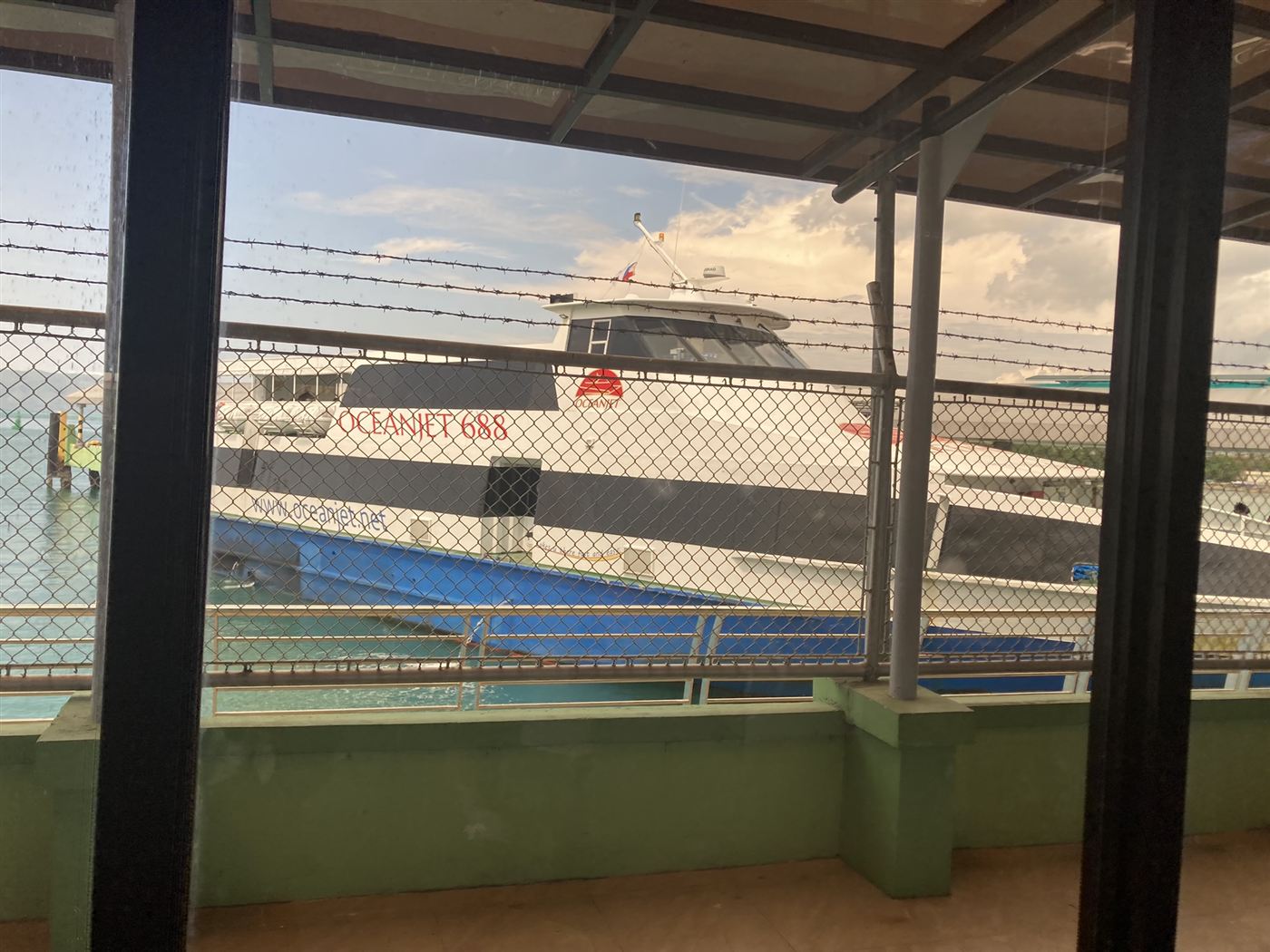
The most common route to Bohol is by ferry from Cebu’s Pier 1 with the company OceanJet, heading to Tagbilaran. I’d booked the earliest boat — the 5:10 a.m. departure — online in advance (for reference, one-way was about 1,000 pesos as of June 2026). I arrived at Pier 1 an hour early, at 4:10 a.m. First, you get your seat ticket issued at the check-in counter, where there’s always a long line. Usually they ask for an ID such as a passport when issuing the ticket, but this time, mysteriously, they waved me through. The departures are always delayed — but being the very first boat of the day, this one left almost exactly on time! After sleeping like a log for about two hours, I arrived in Tagbilaran, Bohol’s biggest town.


Onward to the Chocolate Hills!
Leaving Tagbilaran’s port, I waded through the relentless tour and tricycle (motorbike taxi) touts and headed into town. I rented a bike at my usual rental shop (350 pesos a day). The bikes here are cheap, but the hard seat gradually has your backside crying out — though that, too, is part of the joy of travel.
The town of Tagbilaran is packed with malls. You won’t see a single one anywhere else in Bohol, yet this town has mall after mall. I do wish they’d spread a few out into the more rural areas — it would be a lot more convenient. Anyway, I rode straight through Tagbilaran and pointed the bike toward the Chocolate Hills.
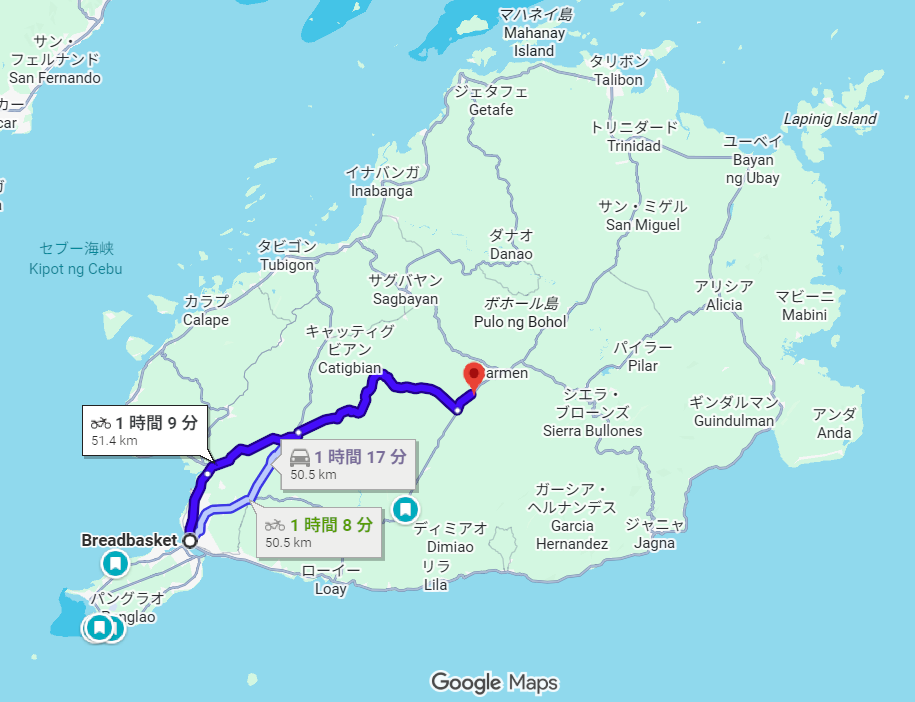
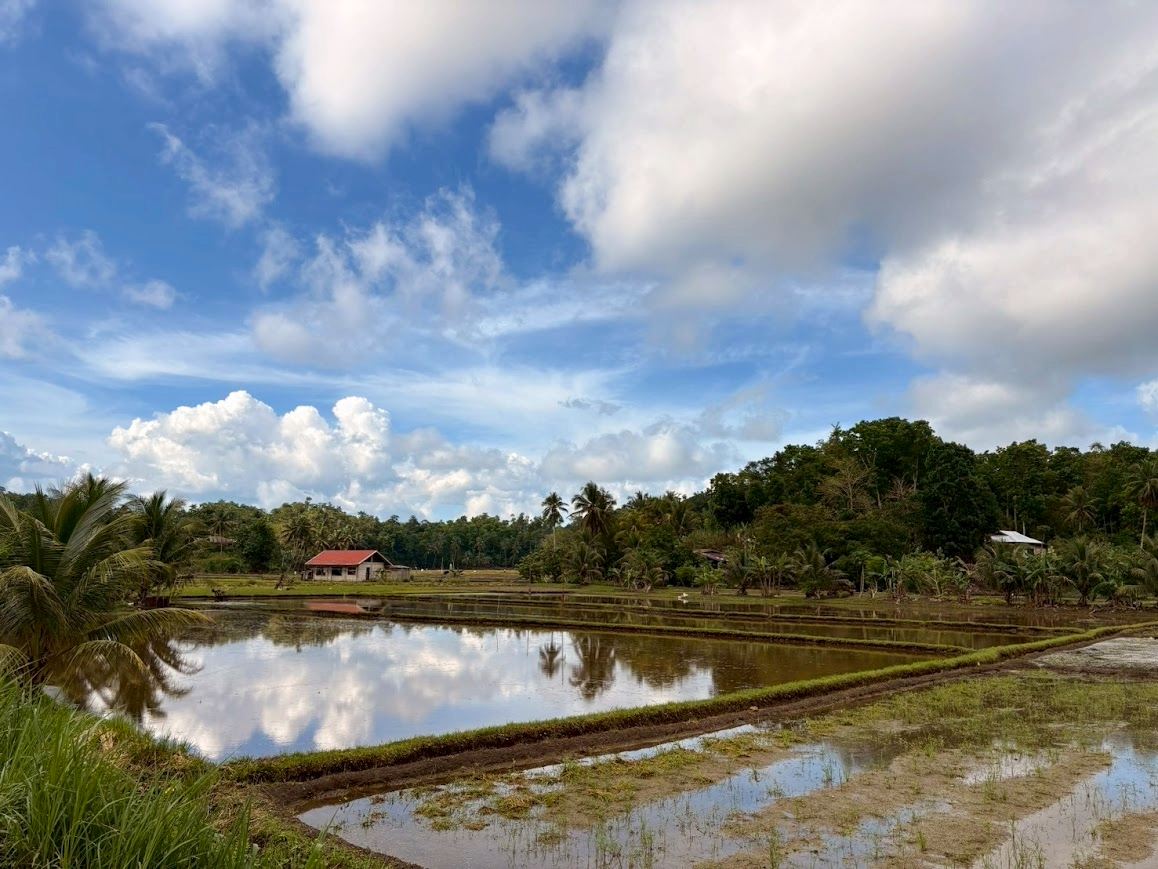
Riding through Bohol’s mountains, you pass goats everywhere, grazing cows, rice paddies — endless, almost impossibly idyllic countryside. If it weren’t for the coconut trees, you might think you were in Hokkaido or Nagano. This richness of nature is another of Bohol’s charms.
After about an hour on the mountain roads, I reached the viewpoint — the place to take in the Chocolate Hills. I parked the bike and took a shuttle up the slope; the higher we climbed, the more those bumpy little hills came into view. The final trial is this staircase. Climb it, and a whole crowd of those rounded hills is waiting for you!
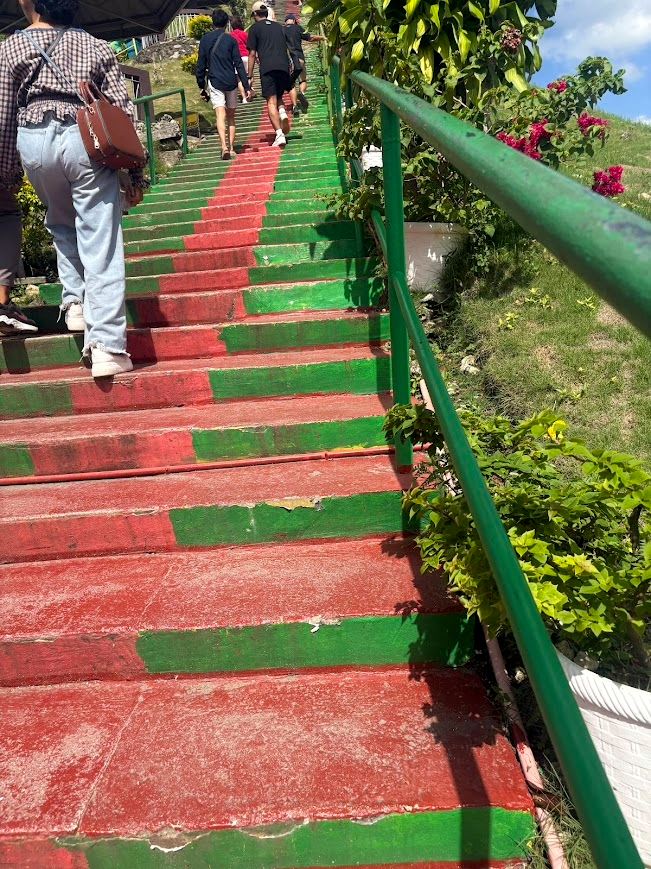
The View That Awaits at the Top
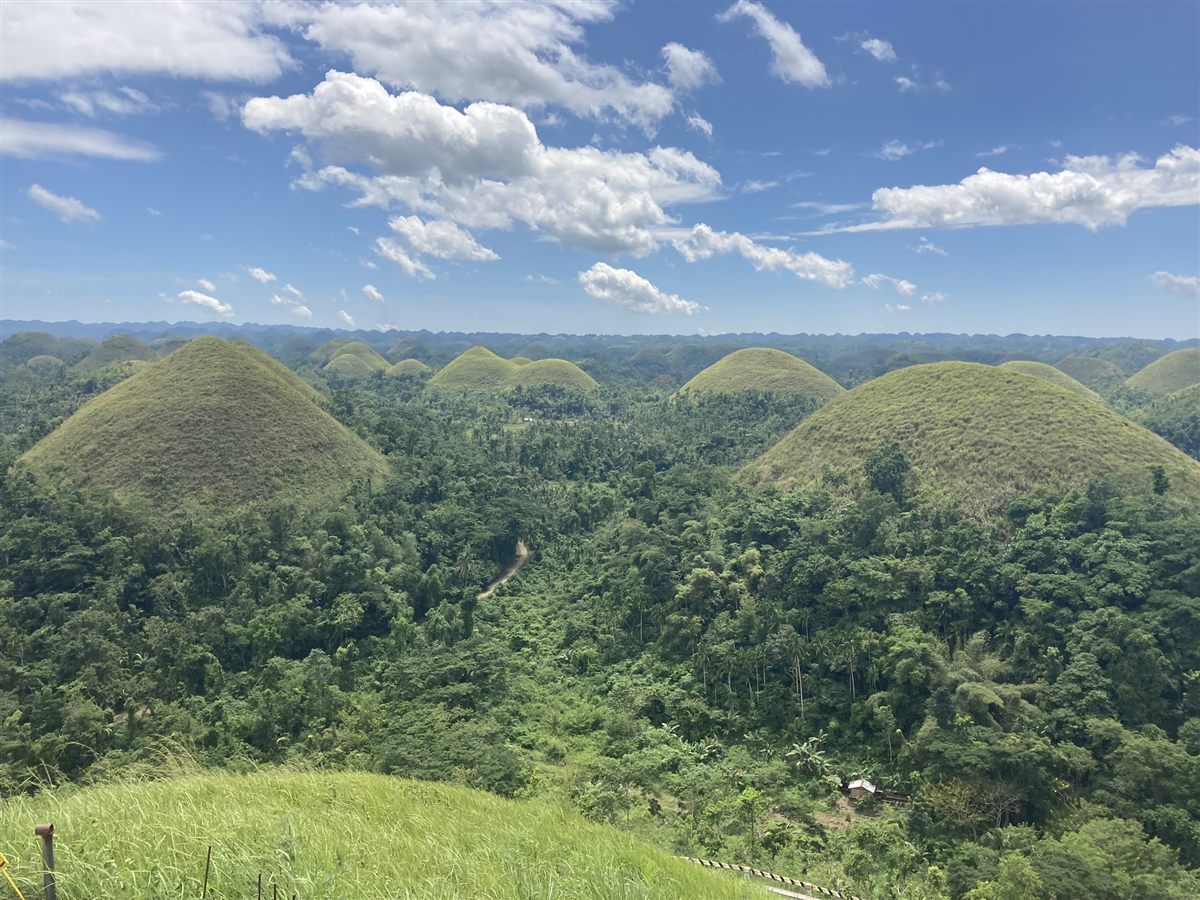
Push your way up the stairs and, from the terrace, the Chocolate Hills open up before you. Strange little hills dotting a vast stretch of land. Apparently they turn brown in a certain season — which is said to be the origin of the name. Charming and yet somehow uncanny; the strange scenery melts away the fatigue in your legs. As with Cebu’s Osmeña Peak (see Osmeña Peak — Cebu’s Highest Point), a landform that nature shaped little by little over spans of time we can scarcely imagine inspires awe simply by being there. It’s a world utterly beyond human reach.
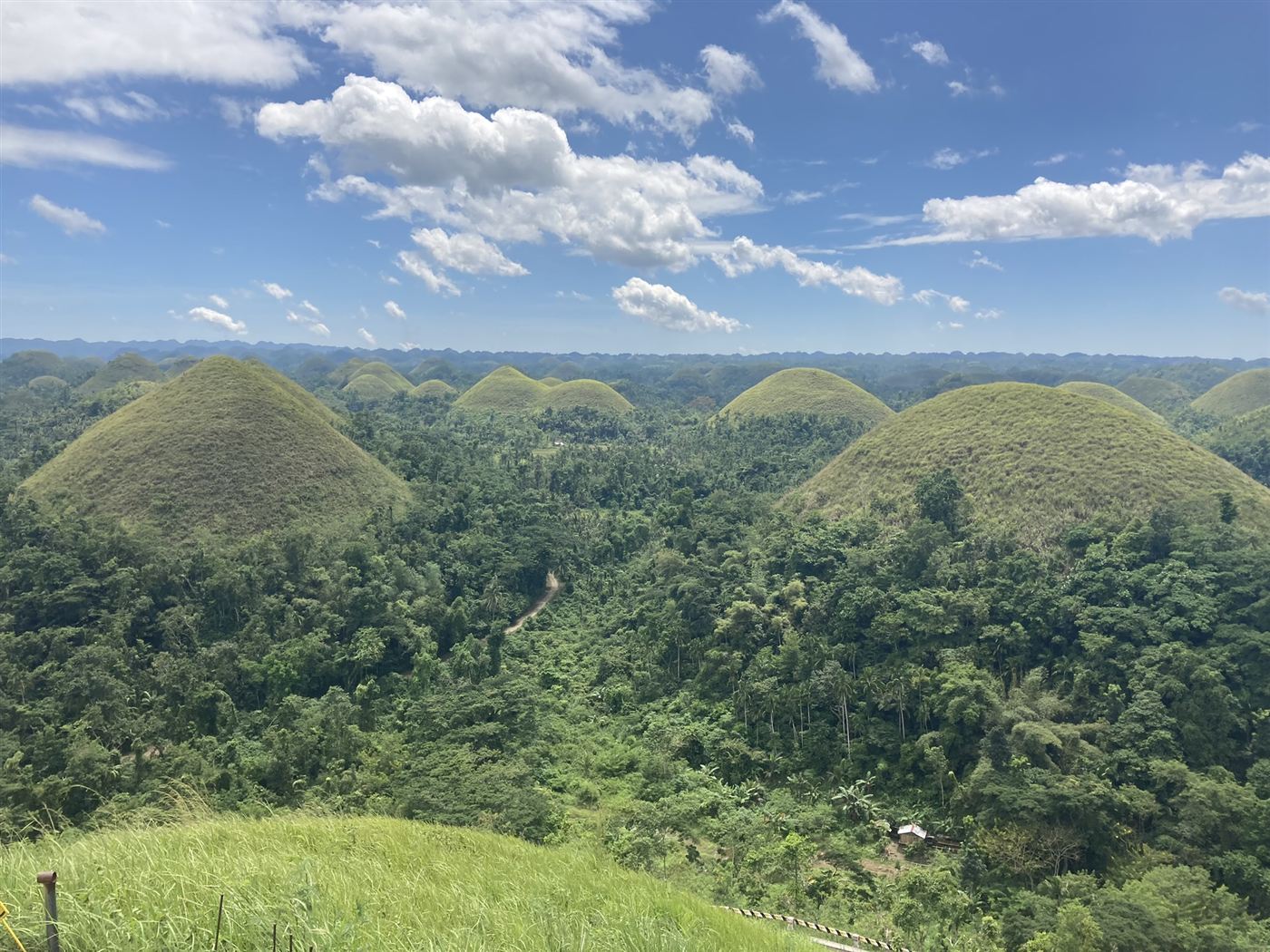
I could vaguely sense that the seabed must have risen up somehow, but no further words came no matter how I shook my head — so I’ll add the official explanation from the site here.
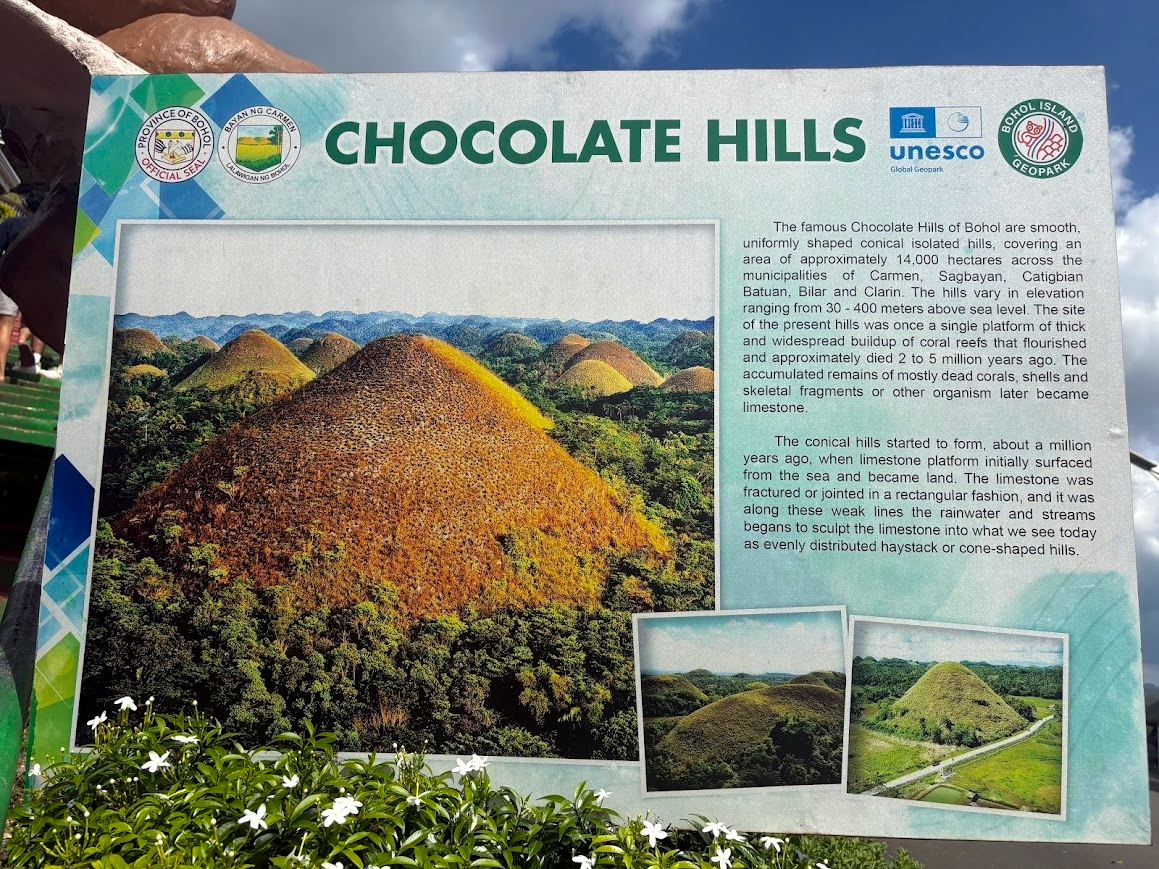
“The famous Chocolate Hills of Bohol are smooth, uniformly shaped conical isolated hills, covering an area of approximately 14,000 hectares across the municipalities of Carmen, Sagbayan, Catigbian, Batuan, Bilar and Clarin. The hills vary in elevation ranging from 30–400 meters above sea level. The site of the present hills was once a single platform of thick and widespread buildup of coral reefs that flourished and approximately died 2 to 5 million years ago. The accumulated remains of mostly dead corals, shells and skeletal fragments or other organisms later became limestone. The conical hills started to form about a million years ago, when the limestone platform initially surfaced from the sea and became land. The limestone was fractured or jointed in a rectangular fashion, and it was along those weak lines that rainwater and streams began to sculpt the limestone into what we see today as evenly distributed haystack- or cone-shaped hills.”
Visiting the Tarsiers’ Forest
When you think of Bohol, you think of the Chocolate Hills and the tarsier. As an aside: when a Japanese person says “tāsha” to a Filipino, they rarely understand at first. After a lot of back-and-forth, you finally get an “Ah, tarsier.” In the Filipino pronunciation the ending rises — “tar-SItr” — and to me it sounds almost like French, which makes it tricky.
According to a coworker, the tarsier is so delicate that it can die from the shock of a loud noise. Because of this, they’ve declined so dramatically that you can no longer see them in the wild. Sure enough, at the Tarsier Sanctuary we visited, the guide kept one finger to her lips the entire time, repeating “Shh, shh.”
The sanctuary protects the tarsiers inside netted enclosures in the forest, and a guide walks you around to see them. Clinging in a gap between branches and leaves — somewhere you’d absolutely miss without being shown — was a tarsier. A body that fits in the palm of one hand, and enormous eyes. “So tiny — and those eyes, so big!” was, quite literally, my entire reaction.
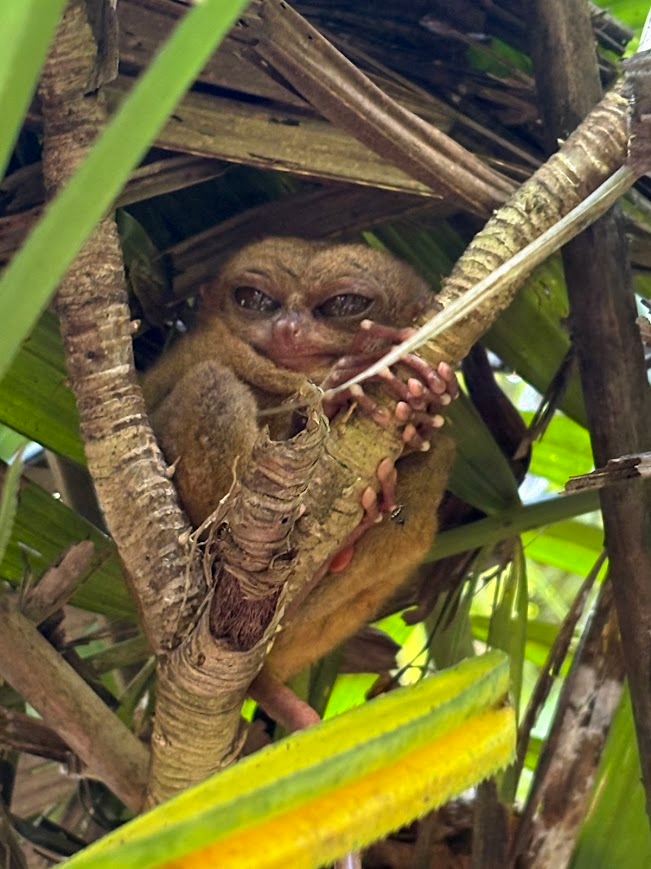
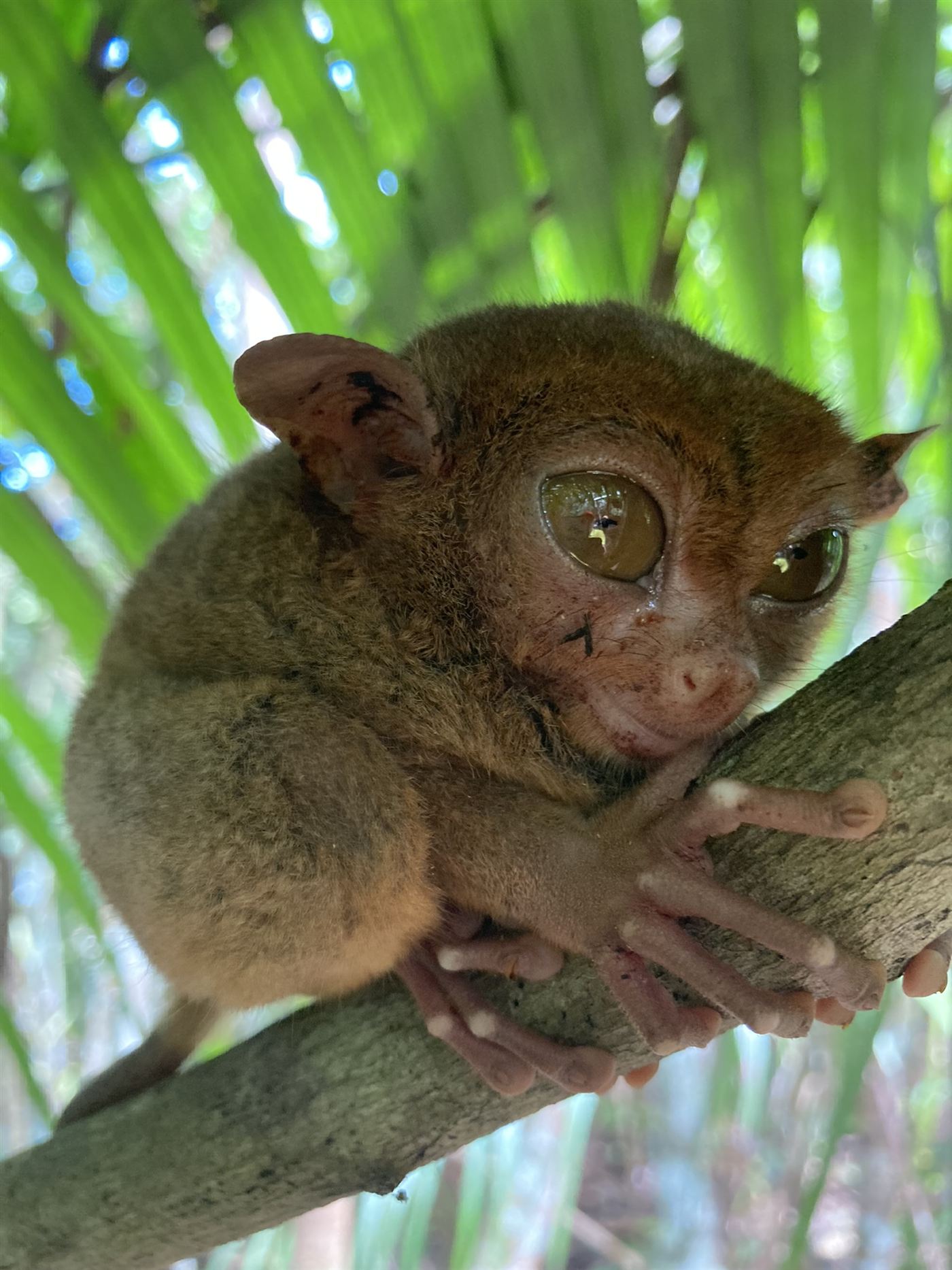
Was I the only one reminded of a certain little alien who once flew across the moon in a bicycle basket — or of a small, wrinkled master who battles evil with the power of the Force?
To be continued in the Bohol — Panglao Island edition…