
Cebu Kurassic Journal
Cebu Street Snacks — Part 3
Sapin-sapin, Linugaw & Empanada
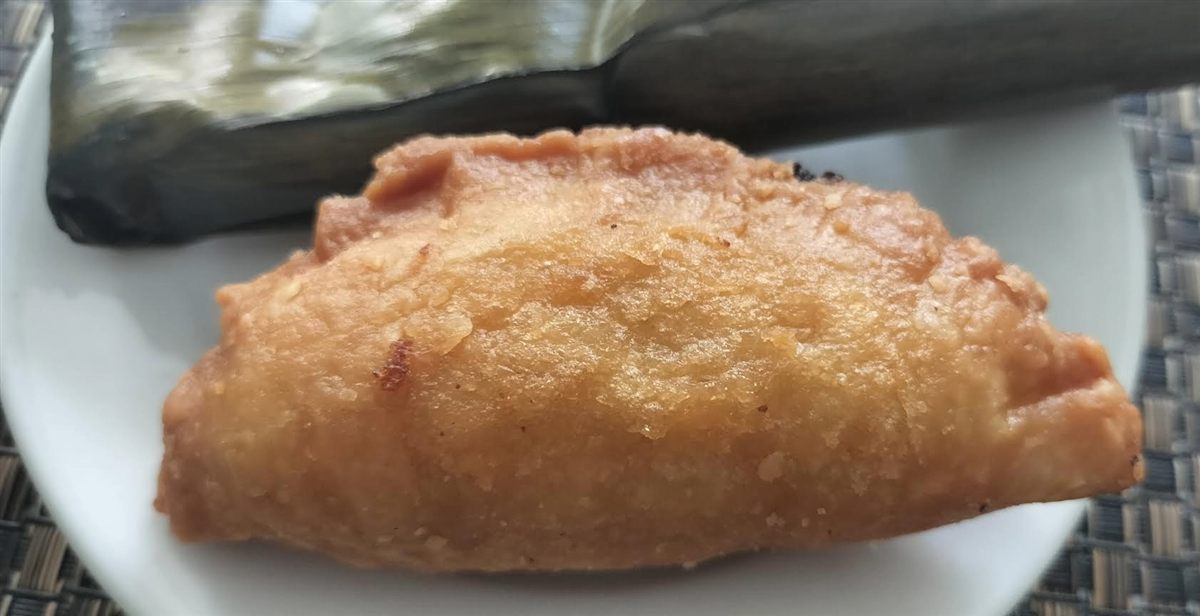
More personal favorites — entirely biased, entirely mine.
Sapin-sapin
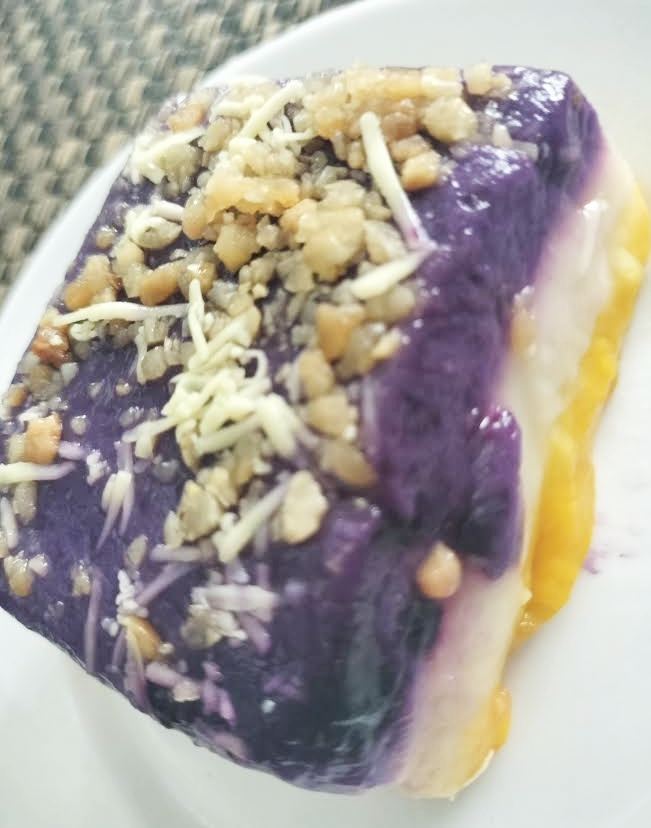
Sapin-sapin is a layered cake made from glutinous rice and coconut. The texture resembles uiro — the traditional Japanese wagashi from Nagoya — soft, dense, and slightly chewy. Usually 2 or 3 layers; purple and white is the most common color combination. About 20 pesos.
What matters most with sapin-sapin, I’ve decided, is the texture. It should be soft but not collapsing. Occasionally I find a version that’s so delicate it practically dissolves in the mouth — slightly hard to eat, but extraordinary in flavor. That’s the one worth hunting for.
Linugaw
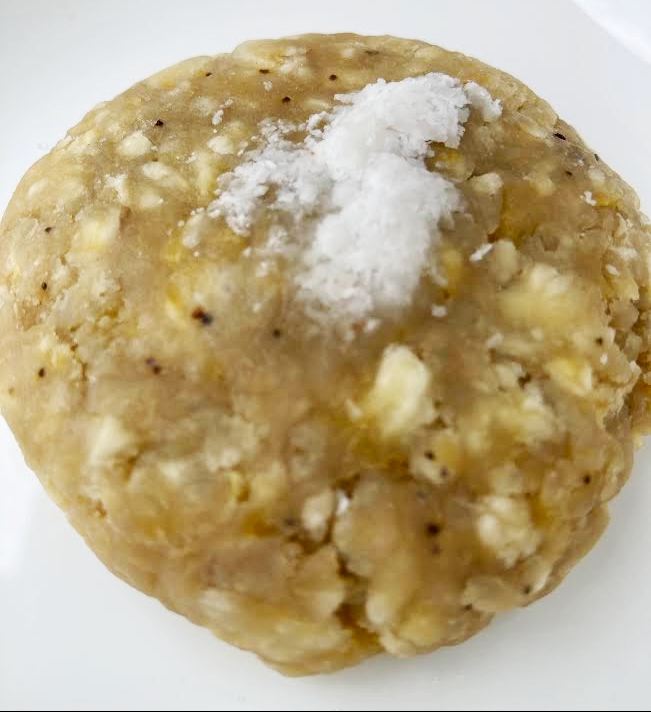
A daily snack for me. Linugaw is made from saba — the cooking banana used all over the Philippines — mashed and shaped, then topped with coconut flakes. The sweetness is lighter and more refreshing than most street sweets, which makes it feel slightly less guilty even when you’ve already eaten three other things. (The guilt reduction is nominal but psychologically useful.)
Saba banana is incredibly versatile — steamed, boiled, grilled, fried, all good. Linugaw is essentially the sweet potato treatment applied to banana: mash, shape, serve. About 20 pesos, but vendors selling it on the road are less common than others. Buy immediately on sight.
Empanada
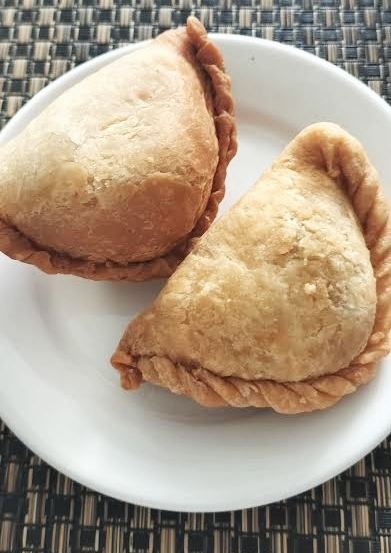
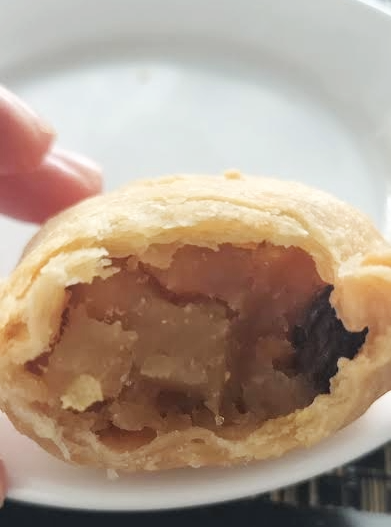
The empanada is, according to a Filipino colleague, descended from Spanish pastry brought during the colonial era. The shape resembles a gyoza (Chinese dumpling) — a half-moon with a crimped edge. The shell is lightly sweet, crispy, and cracker-like. Fillings vary: “vegetarian” versions with potato and vegetables, meat fillings, and ham-and-cheese versions. Savory-sweet, filling enough to satisfy a snack hunger properly.
Street and karenderia empanadas run 15–20 pesos. Restaurants sometimes serve an elevated version — three times the size, three times the price.
The thing about empanadas: I don’t see them very often. They’re not everywhere like puto maya or biko. So when I spot one, I buy it immediately, and probably more than one. The accumulated anticipation of not knowing when I’ll find the next one makes it taste better than it might otherwise.
Continued in Street Snacks Part 4…