Cebu Kurassic Journal
Camiguin — Final Day
Tuna, Airports & Quiet Thoughts
Buying Tuna at the Market
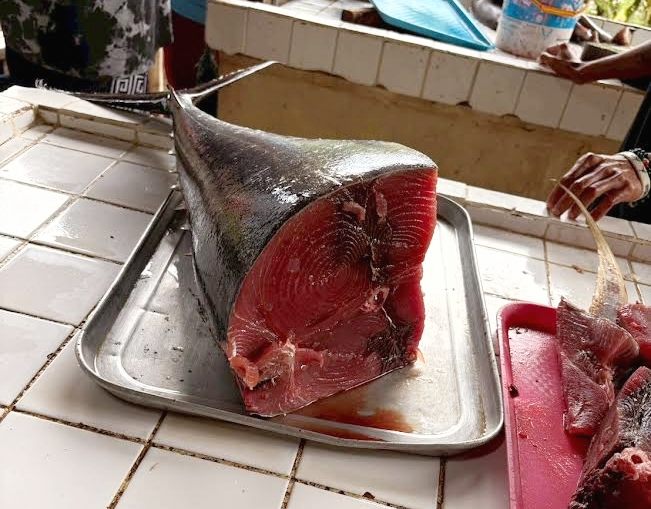
As I wrote in Day 1, Camiguin is known for tuna. Over the trip I’d passed by the market several times and noticed a large fish lying on the counter — the kind of size you’d see at a Japanese sushi restaurant’s cutting demonstration.
The price: 500 pesos per kilo, any cut. Toro (fatty belly) costs the same as lean red meat — first come, first served. The vendor pointed enthusiastically at the belly section — “Belly, belly!” Clearly Filipinos appreciate toro too. His sales pitch: “You can’t get this cheap in Japan.” He wasn’t wrong.
I’d been thinking about buying tuna to take home since Day 1. With a cooler bag packed for exactly this purpose, I swung by the market on the way to the airport.
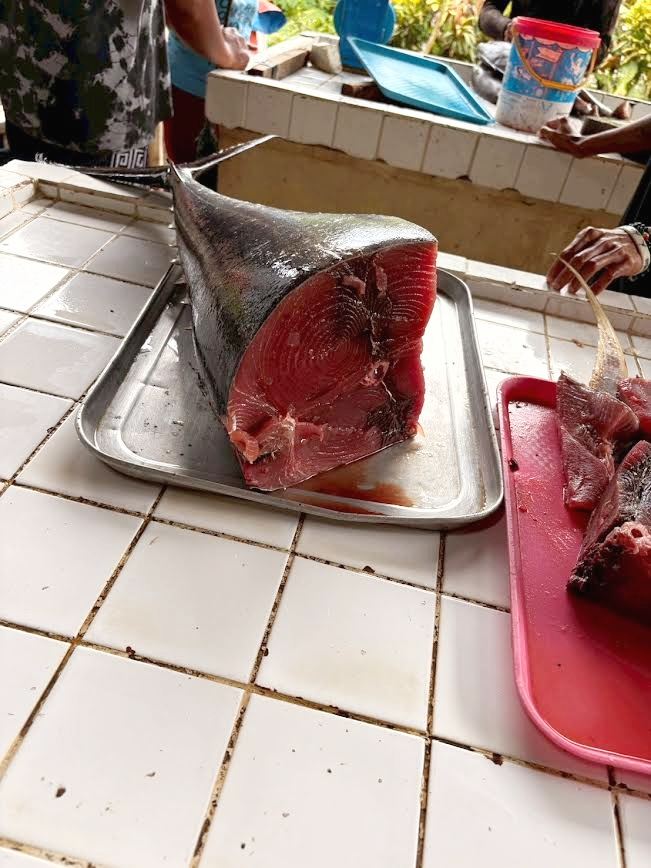
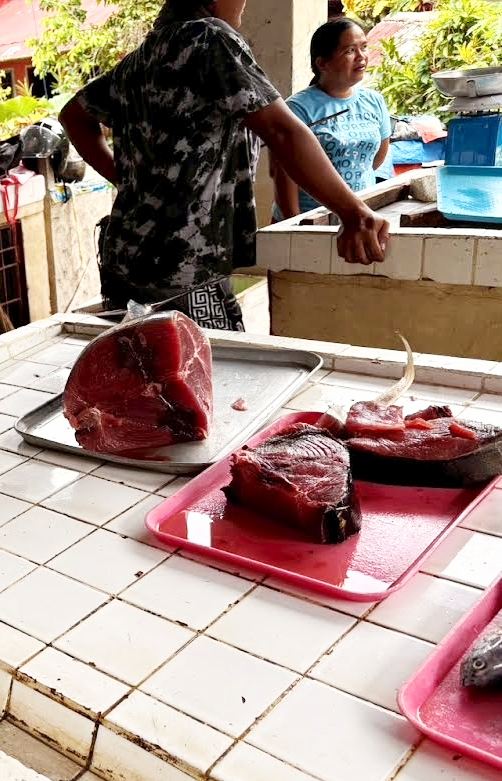
The tuna was still there — slightly smaller than yesterday. The belly was gone. Of course it was. Lesson learned: when you want something, don’t wait. But I bought a good piece of red meat, and looked forward to cooking it at home.
Heading Home
Motorbike back to the airport, rental returned in about ten seconds, bag through security.
At airport security, I always think of something that happened in my first year in Cebu. Returning from a trip to Japan via Manila, I transferred to a domestic flight and waited for my bag after the X-ray machine. Five minutes passed. Nothing. Ten minutes. Still nothing. Something wrong with my bag?
I looked over at the security officer monitoring the screen.
He was asleep.
I looked again. Still asleep. I tapped a nearby colleague on the shoulder: “Is he… sleeping?” The colleague burst out laughing and woke him up. Then everyone nearby started laughing too.
This, in some ways, is the Philippines. Frustrating sometimes — but also kind of liveable. Not everything needs to be so serious.
Wrapping Up Camiguin
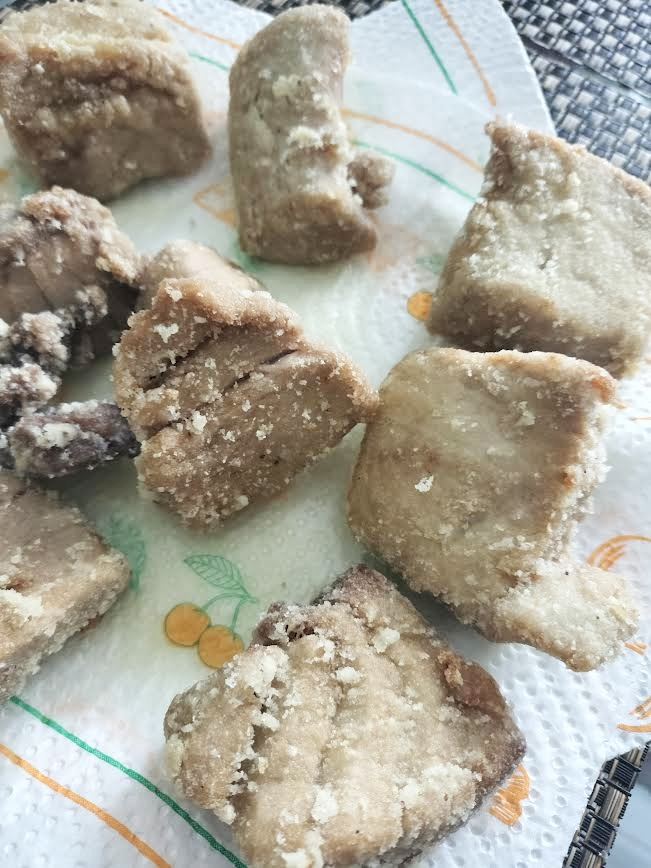
Back home in Cebu, I made deep-fried tuna. Outstanding. After that, I started buying tuna at any market or roadside stall where I spotted it. The tuna phase has not ended.
The Philippines lags behind Japan in environmental awareness — plastic waste in rivers, untreated water running into waterways. It troubles me. But I also know Japan had its own period of this, and I can’t simply criticize people who are prioritizing survival over ecology. In parts of Cebu City, I see homes with corrugated iron roofs and plywood walls, open gaps where windows would be. Laundry is done in rivers. For people living like this, “protect the environment” is a luxury, not a priority.
And yet — Camiguin’s sea was still clean. The old church ruins were still considered worth visiting. The culture of using what you have, and finding enjoyment in what’s around you, was very much alive. It reminded me of what life was like before smartphones, when things were less convenient but somehow more deliberate. Choices were fewer. Promises carried more weight.
The further you go from the city, the more remote the island, the more limited the options — and paradoxically, the more space there is to breathe. That’s why I keep coming back to the smaller islands.
End of Camiguin.