Cebu Kurassic Journal
Argao Torta — Cebu's Best-Kept Pastry Secret
Discovering Torta
“Torta?” — any Japanese person would automatically hear “tart.” But it’s torta. And it’s different.
I first heard about Argao’s torta through a conversation with a Filipino coworker. I’d been systematically working through every kind of street food I could find, and I was running out of new things to try. So I interrogated my Filipino colleagues about what I might have missed. One of them mentioned torta from Argao — a town in southern Cebu. Even the other Filipinos in the room hadn’t heard of it. Apparently his father’s family is from Argao and there’s a particular shop there that makes exceptional torta.
A few days later, he arrived at work carrying torta. His father had happened to make a trip home, and my colleague had asked him to bring some back. What a guy. That first taste reminded me of a French madeleine — light, soft, delicately sweet. I loved it immediately.
Making the Pilgrimage to Argao
From that point on, I promised myself I’d go to Argao if I ever had the chance. That chance came on the return trip from Osmeña Peak — Argao sits along the coastal road that connects Cebu City to the mountain peaks, and I had no intention of passing through without stopping.
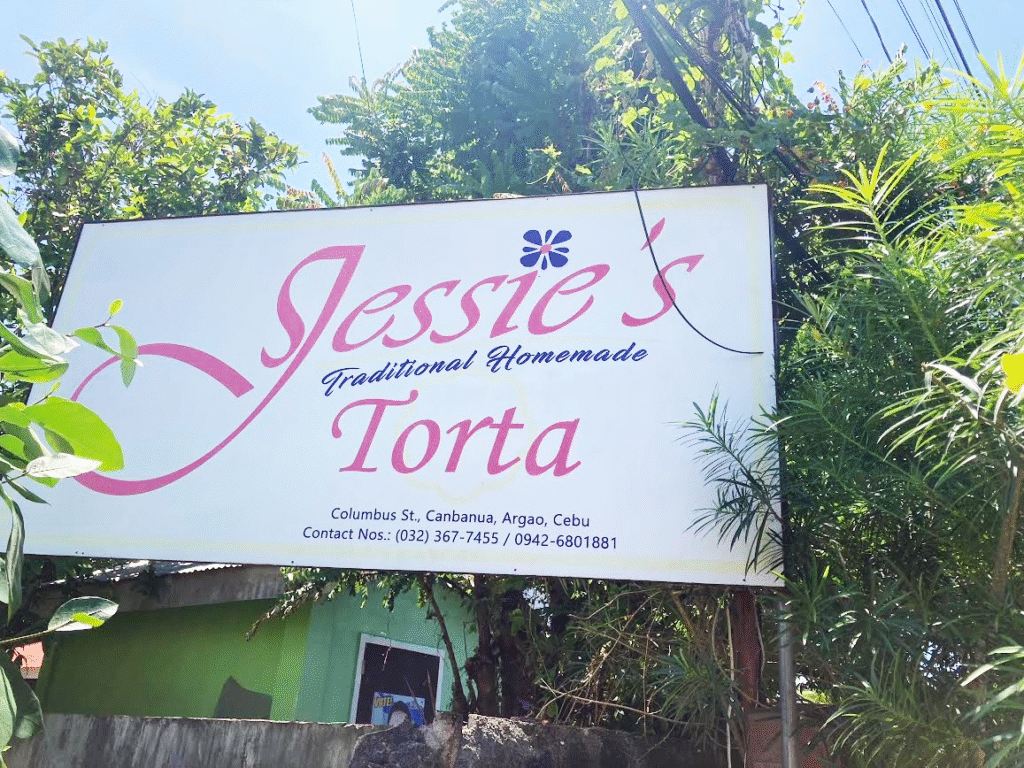
I’d been in Cebu for a while by then, but I had completely forgotten the name of the shop my colleague mentioned. I asked Google Maps for torta shops in Argao and went through the options, but nothing rang a bell. So I just picked the highest-rated one: Jessie’s Torta.
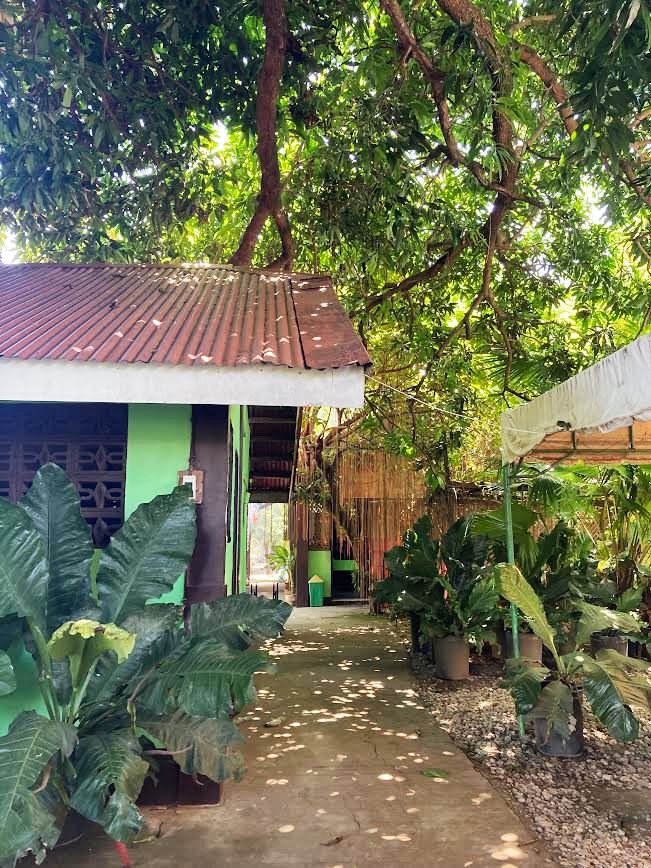
The address led me to what looked like an ordinary residential property. I circled past it once, second-guessing myself, then turned around and walked through the gate. A woman relaxing on the porch greeted me. I asked if this was the torta shop. “Yes, follow me,” she said, leading me deeper into the property.
In the back: a small courtyard with a retro atmosphere. Against one wall of an adjoining building, a section had been cut away to create a simple counter. Inside, dimly lit, a woman stood waiting.
Buying Torta
She lifted several fresh-baked tortas from the shelf onto a tray and laid them on the counter. Bigger than I expected — about twice the size of the ones my colleague had brought. I asked for six, and she wrapped each one individually in wax paper.
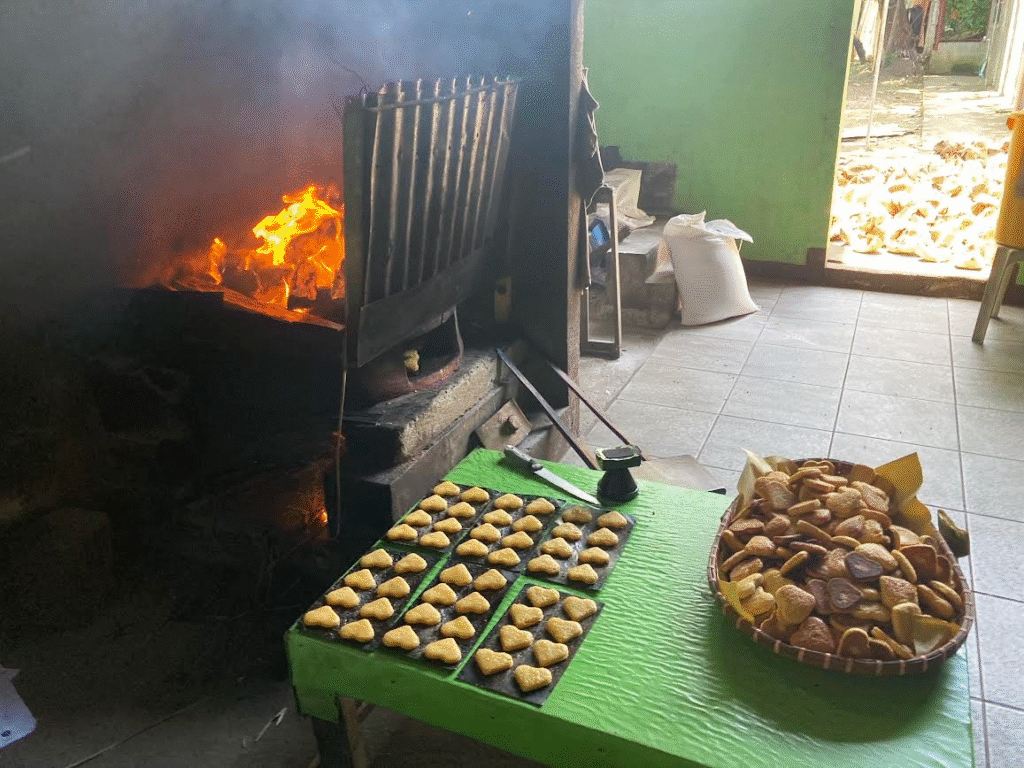
On another shelf, I spotted heart-shaped cookies. Added those. Then she mentioned she also had ice candy. Obviously I said yes.
Six tortas, a bag of cookies, two ice candies. A full haul.
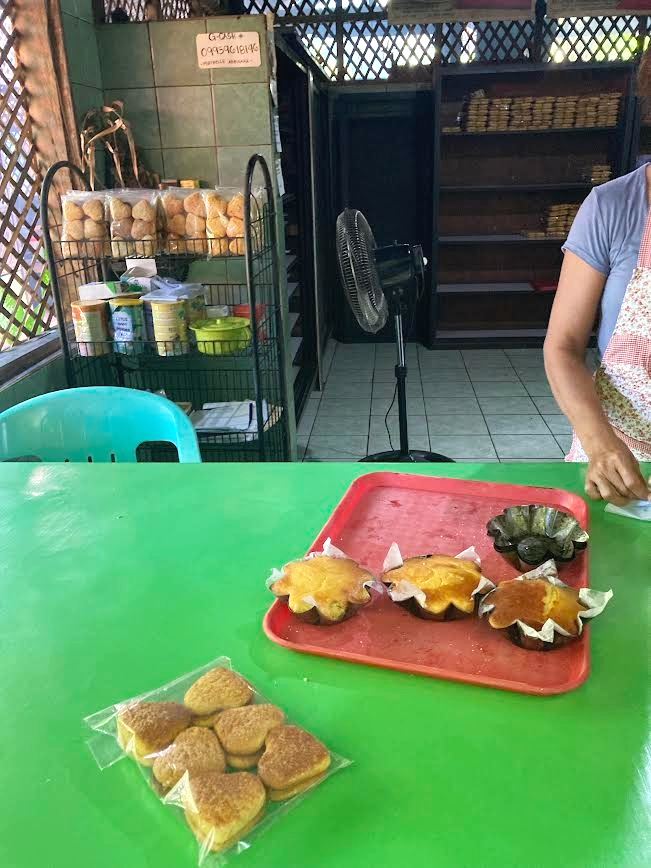
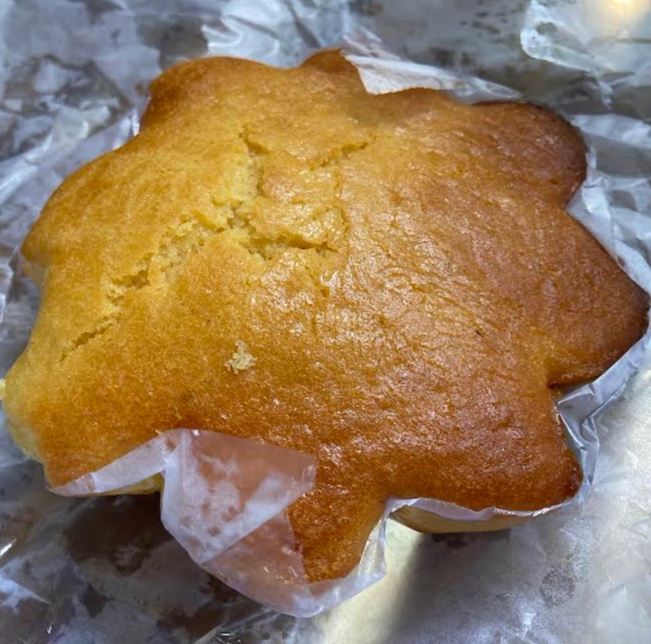
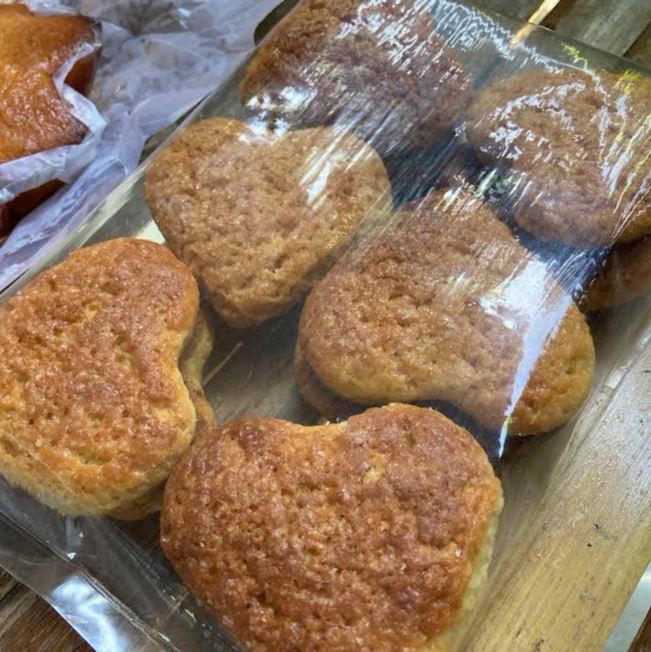
I noticed something in the back and asked about it. She offered to show me the kiln. Around the back of the building: an open fire, burning coconut shells collected from the courtyard where they’d been drying in the sun. The tortas bake in a traditional wood-fired oven heated from above. The shop, she explained, still follows the original recipe and traditional method — no shortcuts. A fascinating glimpse into old-school Philippine baking.
Eating Torta
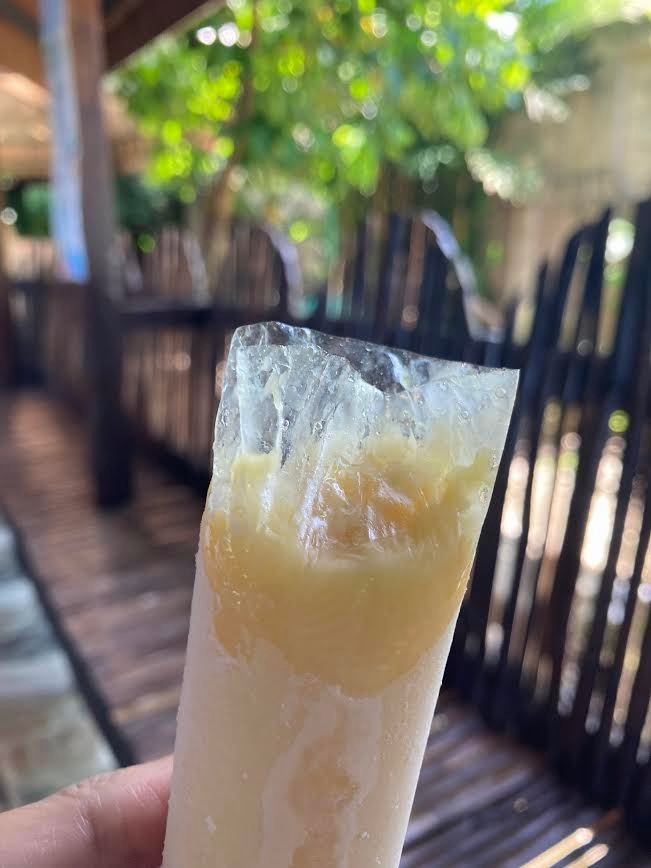
First: the ice candy. Mango and tablea flavors. Tablea is unsweetened cacao pressed into tablet form — Cebu Island, Bohol, and Mindanao are major cacao-growing regions, something I didn’t know before moving here. Filipinos dissolve tablea in hot water with sugar to make a drinking chocolate. So: mango and chocolate ice pops. In Cebu, homemade ice candy comes in a plastic bag — you bite the corner off and work your way up. I sat on a bench in the courtyard shade to eat them. Both were rich and delicious. Only 10 pesos each. The tablea version in particular — deep chocolate flavor, not too sweet, the kind of thing a serious adult chocolate lover would appreciate.
Then: the torta. Still warm. The first bite — gentle sweetness, and underneath it, a soft, almost tangy brightness. I asked the woman what was in it. The secret ingredient is tuba — coconut palm wine, fermented from the sap of coconut flowers. Tuba has a very short shelf life; it turns to vinegar almost immediately. (A colleague from Bohol once brought me some as a souvenir — by the time it arrived, it was already vinegar.) That delicate acidity in the torta? That’s the tuba. It’s a flavor you can’t replicate with wine vinegar or rice vinegar. Something about it is specifically itself.
Honestly, the best baked pastry I’ve eaten in the Philippines. I should have bought more than six.
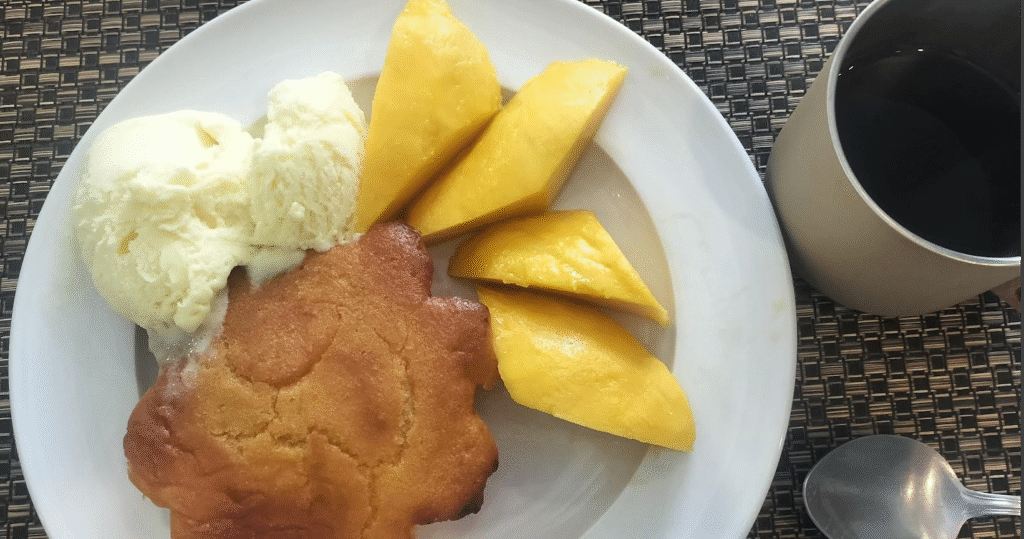
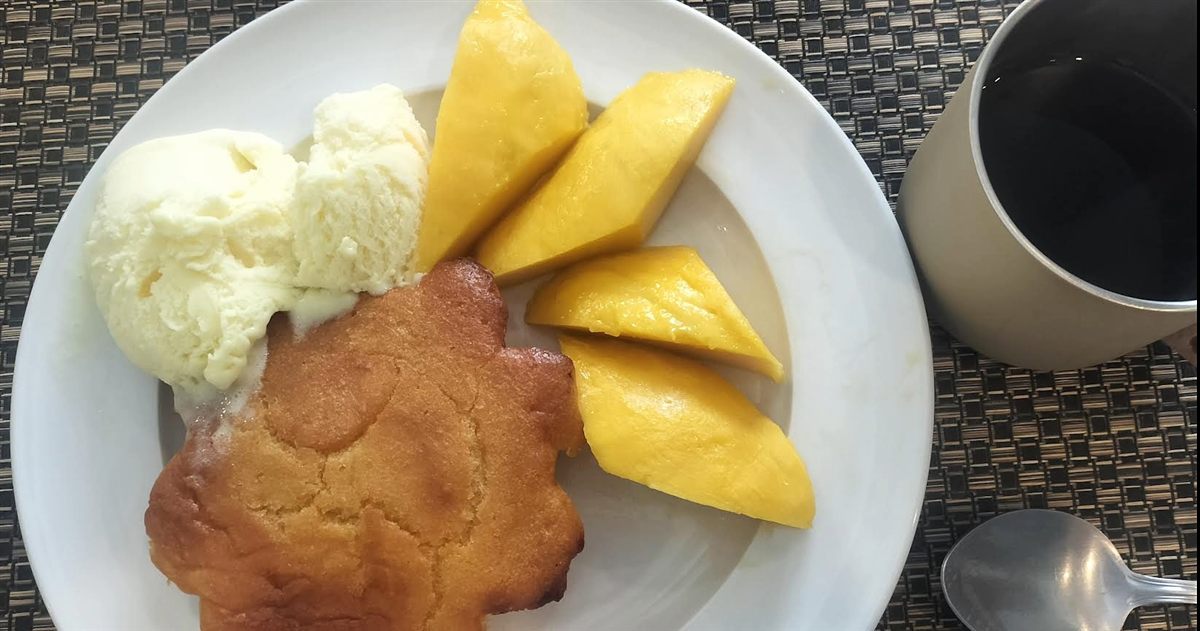
Back home in Cebu, I served the leftover torta alongside fresh mango from the 7D Dried Mango factory outlet and a scoop of vanilla ice cream. My apartment had become a café.
I should definitely have bought more.